

This post may contain affiliate links. Please read our disclosure policy.



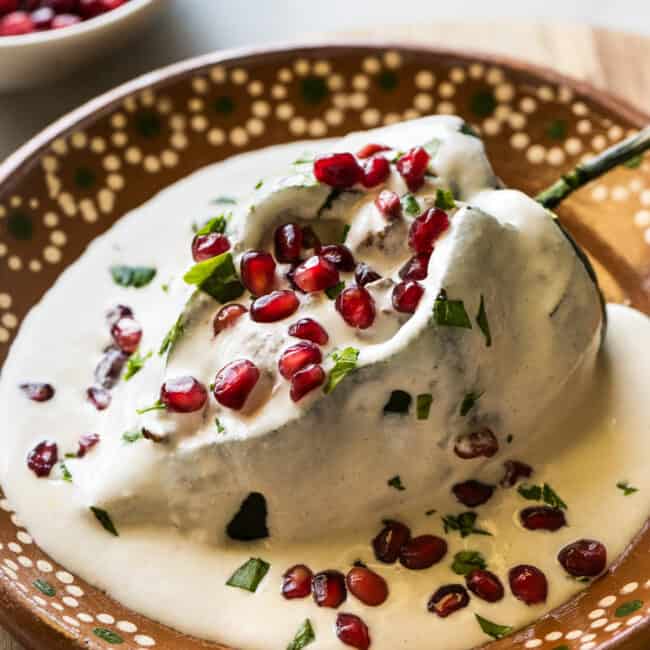
This chiles en nogada recipe is the one I make every September: roasted poblanos stuffed with a sweet-savory picadillo of pork, beef, and fruit, covered in walnut cream sauce and pomegranate seeds. Green, white, and red, the colors of the Mexican flag.
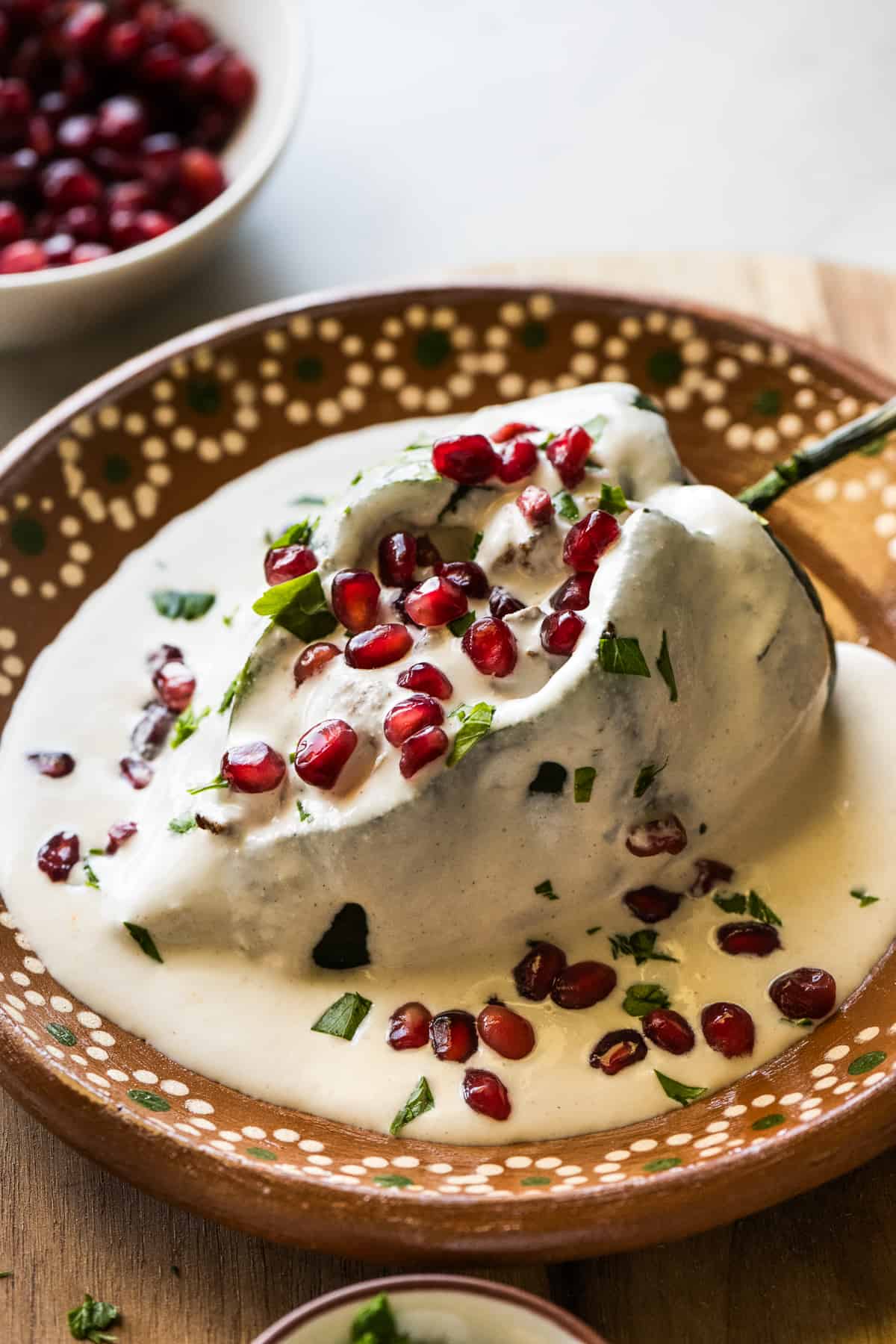

My family is from Zacatecas, and chiles en nogada was never something my parents made. It’s a Puebla dish, hundreds of miles south of where they grew up.
But that didn’t keep it away from me for long. Every list of the most important dishes in the country has it near the top, usually right next to mole poblano, and I wanted to understand why.
Now that I’ve made it, I totally get it. The filling is a picadillo, but sweeter than the one I grew up on, with pear, apple, peach, and plantain cooked in alongside the pork and beef. The poblanos are roasted and stuffed the way you’d do for chiles rellenos, except these never get battered or fried, and instead of a red salsa they’re covered in a smooth walnut cream sauce.
It’s one of the best-looking plates that comes out of my kitchen all year.
What Are Chiles en Nogada?
Chiles en nogada are roasted poblano peppers stuffed with a sweet and savory picadillo of ground meat and fresh fruit, then covered in nogada, a cool sauce made from walnuts and cream. The name comes from nogal, the Spanish word for walnut tree.
The story goes that nuns in Puebla created the dish in 1821 for Agustín de Iturbide, right after he signed Mexico’s declaration of independence. Green chile, white sauce, red pomegranate seeds: the colors of the flag.
There’s also a practical reason it only turns up in August and September. That’s when the poblanos, the pomegranates, and the fruit for the filling are all in season at the same time.
Ingredients You’ll Need
Here’s what matters most, plus a few swaps. Full amounts are in the recipe card below.
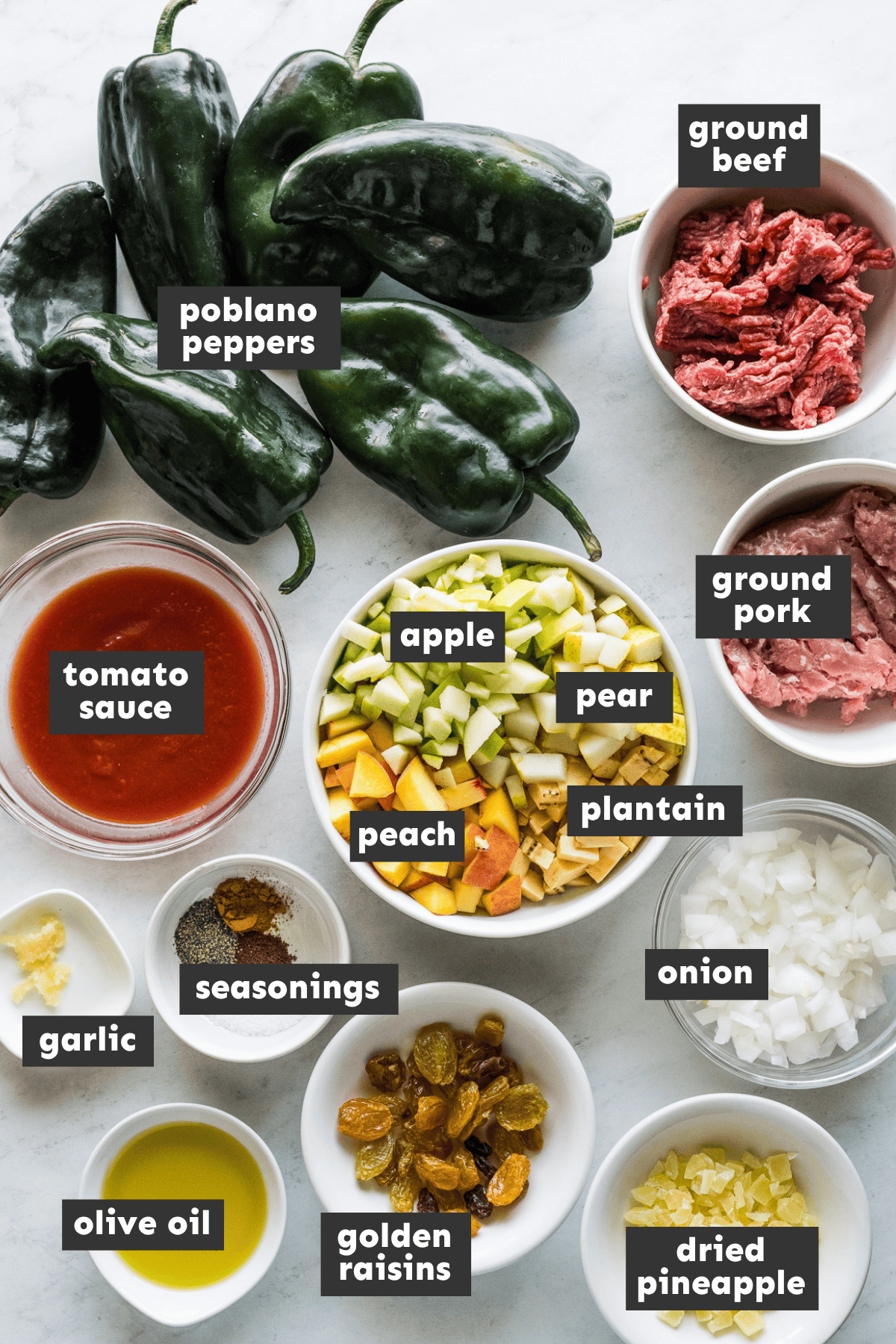
- Poblano peppers: You’ll need 6 large or 8 medium. Look for shiny, firm ones, since wrinkled peppers are older and tend to tear when you stuff them.
- Walnuts: The skins have to come off or the sauce turns bitter, and peeling them is the most tedious part of this recipe. If you can find skinless walnuts, buy those.
- Goat cheese and queso fresco: The goat cheese gives the nogada a little tang against all that sweet fruit. Cream cheese works if you’d rather, though the sauce comes out milder.
- Mexican crema: Thinner and less sour than sour cream, which is what you want here. If your store doesn’t carry it, homemade Mexican crema is easy to make!
- Ground pork and beef: Half pork and half beef is traditional. I use a slightly fattier grind so the filling doesn’t dry out while the fruit cooks down.
- Fresh fruit: Bosc pear, Granny Smith apple, peach, and plantain. Some recipes use apple alone, but all four is closer to the Puebla version, and they each soften differently so there’s texture in every bite.
- Dried pineapple: This stands in for acitrón, a candied cactus that’s nearly impossible to find here and comes from a protected plant that takes decades to grow. Dried pineapple gives you the same chewy sweetness.
- Dry seasonings: Just a pinch of ground cinnamon and cloves.
How to Make Chiles en Nogada
This chiles en nogada recipe comes together in five steps.
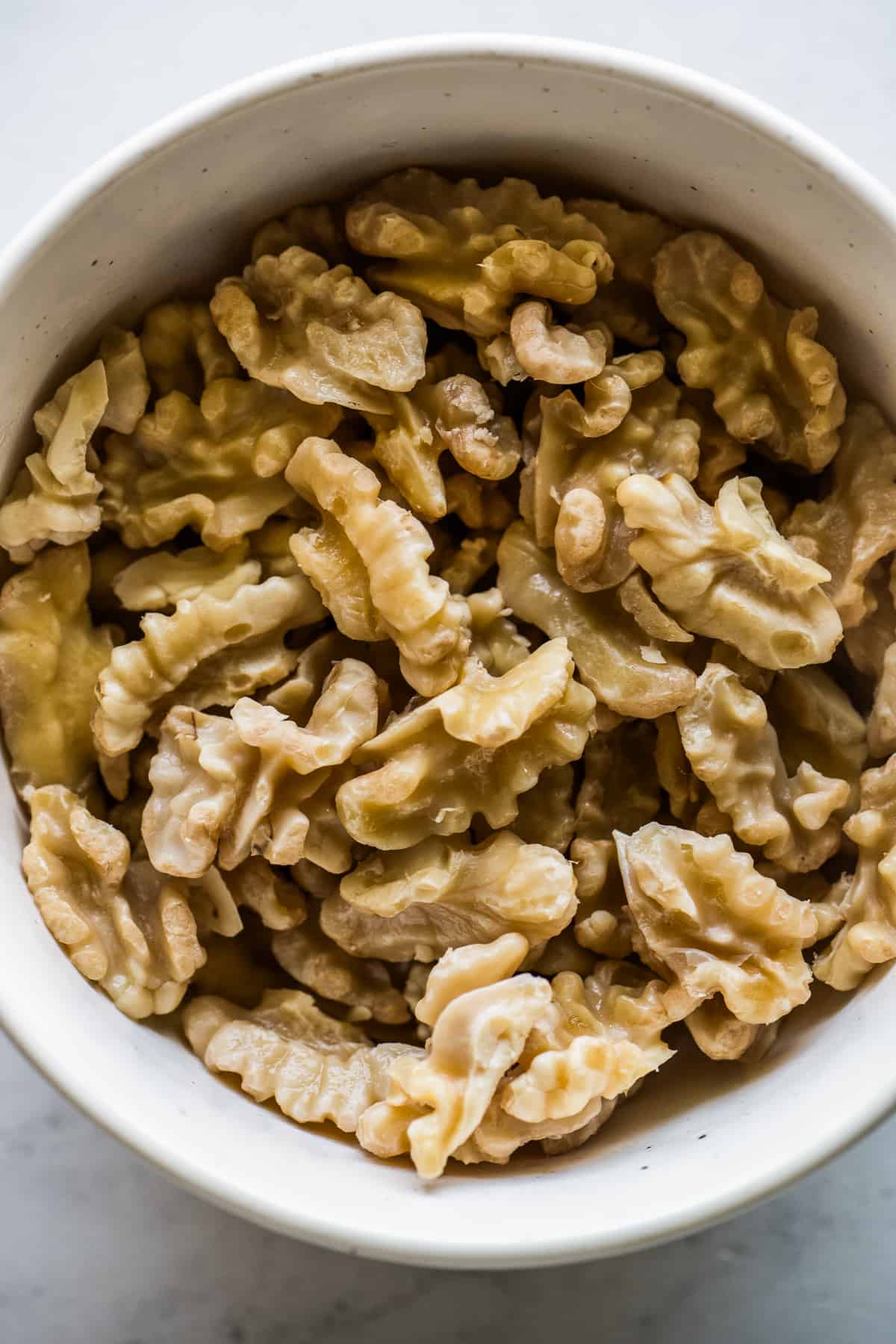
Peel the walnuts. Boil water, add the walnuts, cover, and soak for 5 minutes. Then rub or scrape the skins off. This is the long part, and it’s what keeps the sauce from turning bitter.
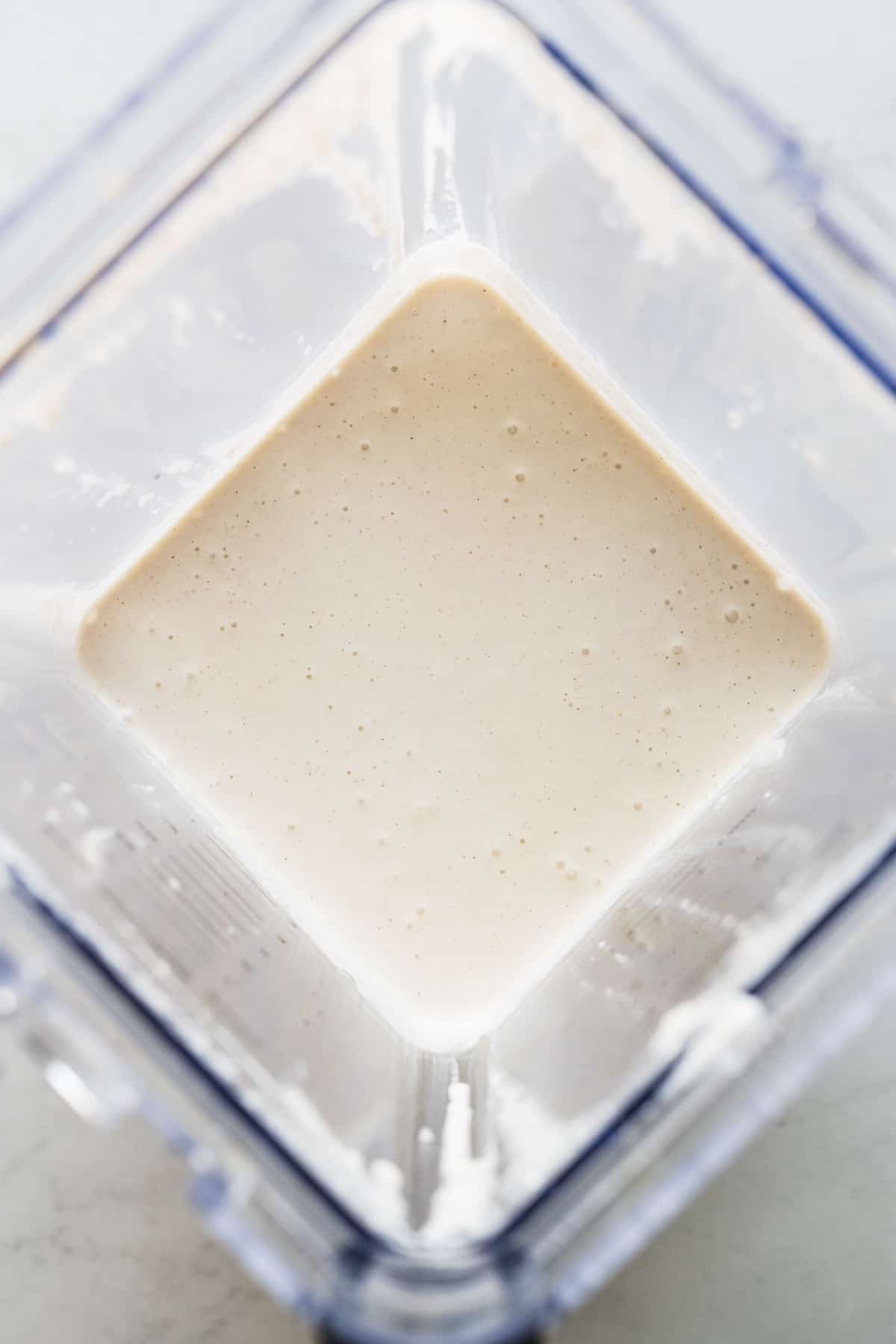
Blend the nogada. Add the peeled walnuts, goat cheese, queso fresco, milk, crema, cinnamon, and sugar to a blender and run it until completely smooth, about 5 minutes.
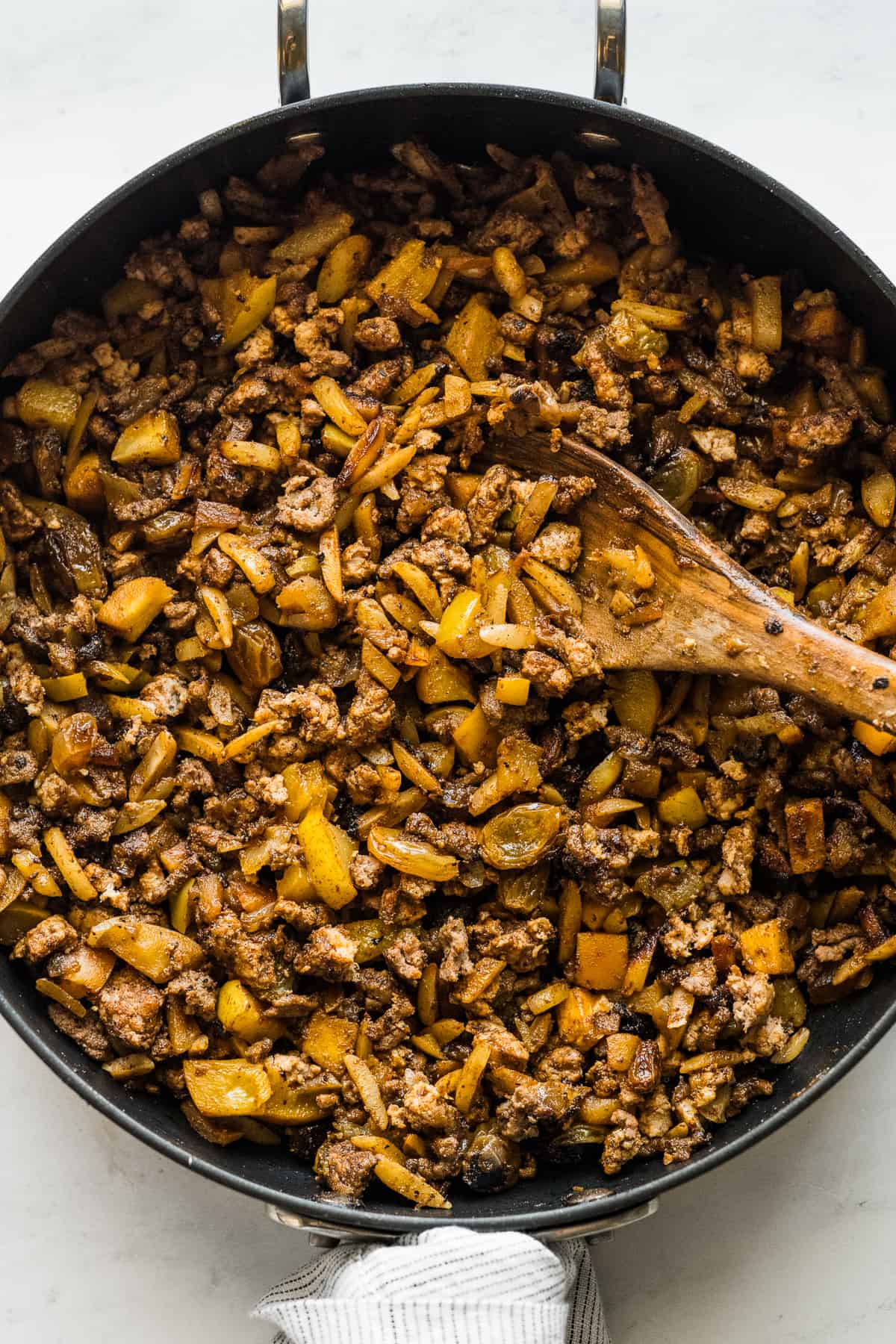
Cook the filling. Soften the onion and garlic, then brown the pork and beef. Stir in the tomato sauce, raisins, dried pineapple, and spices, then add the fresh fruit and almonds and cook until tender.
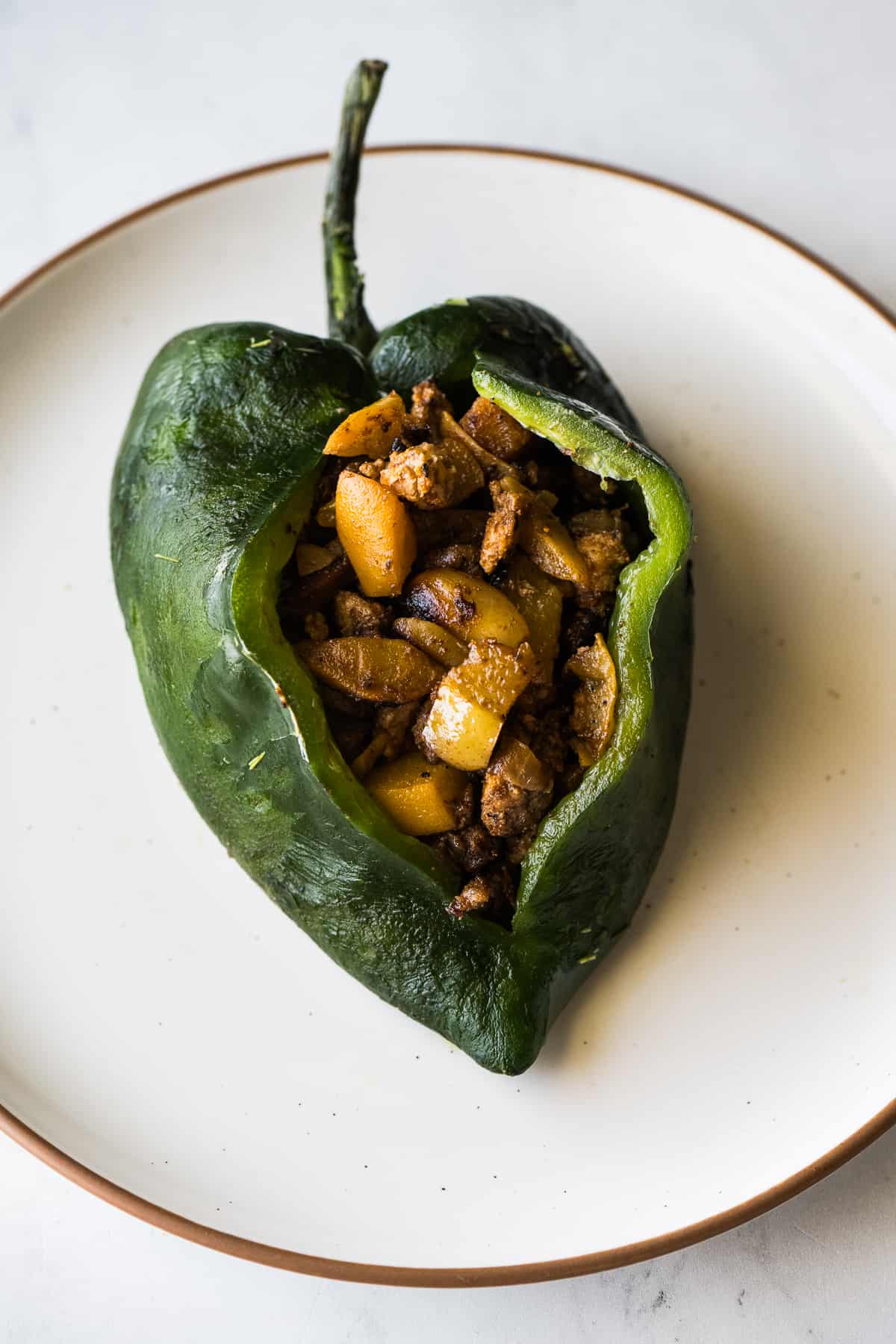
Roast and stuff the poblanos. Broil them until the skins blister, steam them covered for 5 minutes, then peel, slit, and seed. Spoon the filling in and don’t worry if they don’t close all the way. Here’s my full tutorial on how to roast poblano peppers if you’ve never done it.
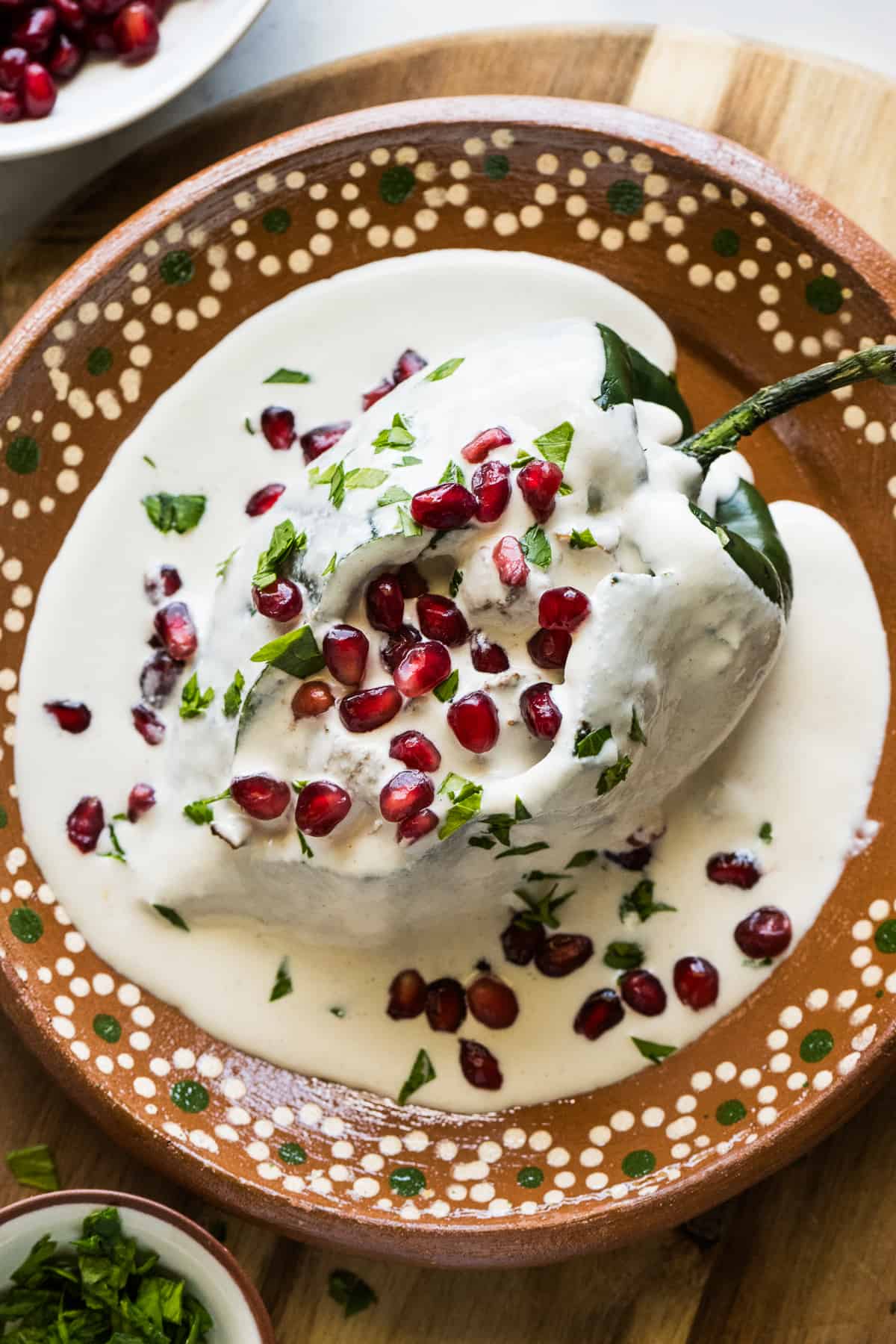
Sauce and serve. Pour the nogada over the peppers and finish with pomegranate seeds, parsley, and flaky salt.
Recipe Tips
- Peeling the walnut skins. This part takes the longest. You can do it all in one day, it just takes a while (it took me 45 minutes). If you want to make it easier on yourself, buy them already skinned, or peel them the night before.
- Chop everything about the same size if you can. You want pieces small enough to eat with a fork. It’s a little tedious, but big chunks of pear sitting next to tiny bits of meat don’t look as good on the plate.
- Buy pomegranate seeds already out of the fruit. Seeding one yourself is a mess, and this is just the garnish.
- Don’t stress about serving it hot. Chiles en nogada is traditionally served at room temperature, and by the time everything’s done and plated, that’s usually where it lands anyway.
Chiles en Nogada FAQs
No. The traditional Puebla version dips the stuffed peppers in whipped egg batter and fries them, the same way you’d make chiles rellenos, and plenty of people still make it that way. I skip it because it makes an already rich dish heavier, and I’d rather not fry if I don’t have to.
You can, but you might not need to. Most of what makes this recipe feel long is peeling the walnuts, so if you buy them already skinned you can get the whole thing done in one afternoon. If you’d rather break it up, the filling and the nogada both keep in the fridge for a couple of days.
Pomegranates are only around for part of the year, which is a big reason this is a late-summer dish. I haven’t needed a substitute myself, but dried cranberries or thinly sliced strawberries would give you the same pop of red and a little tartness.
Not much. It’s rich and it’s usually the main event on its own. One chile en nogada per person is plenty. If you want something alongside, Mexican rice or refried beans are the usual picks.
Chiles en Nogada
Ingredients
For the nogada (walnut sauce)
- 2 cups water, plus more as needed
- 1 cup shelled walnut halves
- 4 ounces goat cheese
- 3 ounces queso fresco
- ¾ cup milk, divided
- ½ cup Mexican crema
- ¼ teaspoon ground cinnamon
- ⅛ teaspoon granulated sugar
For the stuffed peppers
- 2 tablespoons olive oil
- ¼ medium white onion, diced
- 1 garlic clove, minced
- ½ lb ground beef
- ½ lb ground pork
- ¾ cup tomato sauce
- ¼ cup golden raisins
- 3 tablespoons chopped dried pineapple chunks
- 1 teaspoon kosher salt
- ½ teaspoon freshly ground black pepper
- ⅛ teaspoon ground cloves
- ⅛ teaspoon ground cinnamon
- ¼ cup blanched slivered almonds
- ½ Bosc pear, peeled and diced
- ½ Granny Smith apple, peeled and diced
- ½ peach, peeled and diced
- ¼ plantain, diced
- 6 large poblano peppers
- pomegranate seeds, for garnish
- chopped parsley, for garnish
- flaky sea salt, for garnish
Instructions
- Make the nogada sauce. Boil the water in a small pot over high heat. Add the walnuts, cover, and soak for 5 minutes to loosen the skin.
- Using your fingers or a paring knife, carefully remove the papery walnut skin off each walnut and place the peeled, skinless walnuts in a bowl. This is a very tedious process and takes patience, but it's an important step to ensure the sauce doesn't come out bitter.
- Add the skinned walnuts, goat cheese, queso fresco, milk, Mexican crema, ground cinnamon, and sugar to a blender. Blend for 5 minutes until completely smooth. Set aside.
- Make the filling. Heat the olive oil in a large skillet over medium-high heat. Add the onion and cook for 3 minutes, stirring occasionally. Add the garlic and cook for 30 seconds.
- Add the ground beef and ground pork. Cook for 6 to 8 minutes, breaking up the meat into small pieces as it cooks.
- Stir in the tomato sauce, golden raisins, dried pineapple, salt, black pepper, ground cloves, and ground cinnamon. Cook uncovered for about 8-10 minutes, stirring occasionally, until the excess moisture is cooked out.
- Reduce the heat to low and stir in the pear, apple, peach, plantain, and slivered almonds. Cover and cook for about 15-20 minutes, until the fruit is tender and cooked through. Set aside to cool slightly.
- Prepare the poblanos. Line a large baking sheet with aluminum foil and place the poblano peppers on top. Set your oven rack directly underneath the broiler and turn the broiler on.
- Broil the poblanos for 5 minutes or until the skin is blackened and blistered. Carefully flip them over and broil for another 5 minutes or until the skin is blackened and blistered.
- Remove them from the oven and loosely cover the baking sheet with aluminum foil or plastic wrap to keep in some of the heat and help them steam. Let them sit for 5 minutes.
- Peel and rub off as much of the loose skin on the peppers as possible. It doesn't have to be perfect; just as much as you can.
- Cut a small slit down the middle of the peppers with a knife. Carefully scoop out and discard the seeds using a spoon.
- Assemble the Chiles en Nogada. Carefully stuff the peppers with the picadillo filling. Some of the peppers will be extra fragile because of the roasting process and may tear – that's okay. Just do the best you can. The peppers do not need to fully close, so stuff them as much as you can.
- Garnish and serve. Drizzle the nogada sauce over the peppers and garnish with pomegranate seeds, chopped parsley, and a sprinkle of flaky sea salt. Serve immediately.
Notes
- Storage: Store the peppers and the nogada separately in airtight containers in the fridge, the peppers for 3 to 4 days and the sauce for about 3.
- Reheating: To reheat, bake the peppers on a rimmed baking sheet at 375°F for 5 to 10 minutes, then pour the nogada over and garnish right before serving.
- Walnuts: Buying walnuts that are already skinned will save you about 45 minutes. If you’re peeling them yourself, you can do it the night before if you prefer.
- Poblano peppers: The filling in this recipe fills 6 large poblanos or 8 medium ones.
- Serving: Chiles en nogada is traditionally served at room temperature, so there’s no rush to get it to the table hot.
Nutrition
Nutrition information is automatically calculated, so should only be used as an approximation.
More Authentic Mexican Recipes
This recipe was originally published in August 2023 and has been updated with more helpful tips and an overall better recipe.









This is one of my favorite fall dishes to make for a special occasion. The removing the skins from the walnuts is the most tedious and time-consuming part, but I finally found that I can order peeled walnuts on Amazon, so now this recipe will be so much more manageable.
These chiles en nogada were spectacular! It was so good, everyone at home loved them. The only thing I changed for taste was I added a pinch of ground clove to the nogada sauce.
Also, something worth noting is that apparently I must be really slow pealing the walnuts, and if you think you may be too I suggest you take Isabel’s advice and prepare them in advance. It took me almost two hours to do a cup, but it was SO worth it. Next time I’ll just get my kids to help with that too. Thanks for the recipe!
Love this recipe! Everyone enjoyed them , so tasty 😋
Have eaten this lovely dish a number of times in Mexico. It is usually served seasonally when fresh pomegranate is available. Interestingly it has always been served near room temperature.
Yum! It’s my favorite food in México!
That recipe for chiles en nogada looks terrific. Will try it soon!
EXCELENTE, la hice en navidad y resulto muy bien.