

This post may contain affiliate links. Please read our disclosure policy.
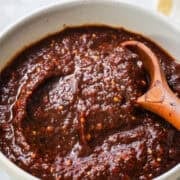

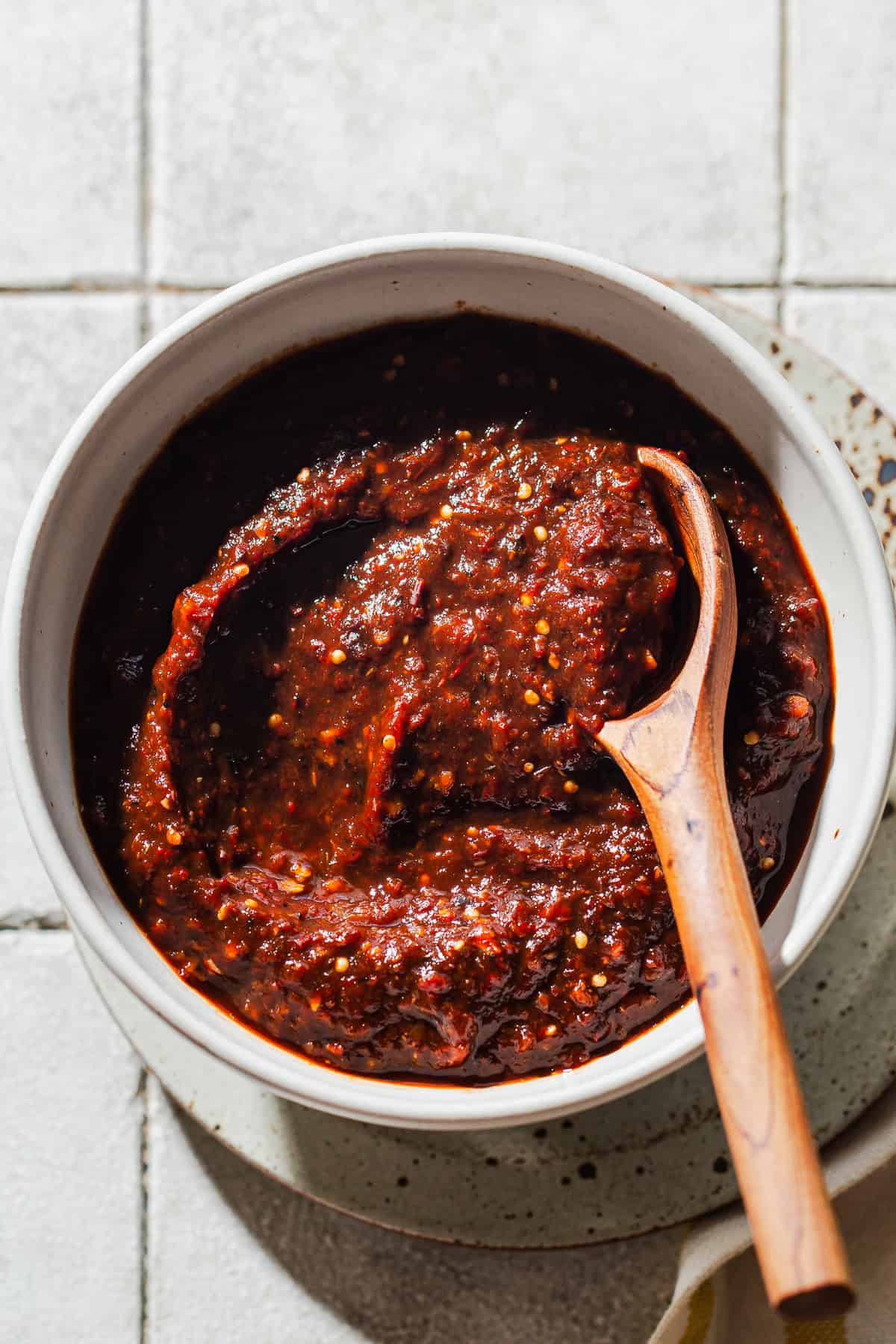
Salsa morita is a traditional Mexican salsa made from toasted and rehydrated morita chiles blended with tomatillos, onion, garlic, and salt.
A Note from Isabel

If you’ve ever been to a great taqueria and found yourself reaching for the dark, smoky salsa over and over again, that’s salsa morita. I don’t remember exactly which taqueria I first had it at, but I remember the flavor immediately. There was a deep, smoky quality to it that I hadn’t tasted in other salsas, and I was hooked. When I got home, I knew I had to make my own version.
What sets this salsa apart from others is the chile morita itself. Unlike fresh salsas that rely on bright, acidic flavors, salsa morita gets its character from the deep smokiness of the dried chiles, a flavor that’s impossible to replicate with anything else. The smokiness is bold like a chipotle pepper in adobo sauce, but not aggressive, and it lingers in the best way. It’s one of the most flavor-packed dried chiles I’ve ever cooked with, and I love it on pretty much everything from tacos and eggs to grilled meats and some tortilla chips. I hope you give this a try! It won’t disappoint.
What Are Chile Moritas?
Morita chiles are smoked and dried jalapeño peppers that have been left on the vine to fully ripen and turn red before being harvested. They’re small to medium-sized with a leathery, slightly shiny skin and a deep brownish-red color. Their flavor is smoky, fruity, and slightly sweet, similar to chipotle peppers but less intense, since moritas are smoked for a shorter period of time.
- Morita vs. chipotle: Both are smoked jalapeños, but they’re not the same. Chipotle peppers are smoked longer, giving them a more intense, woody smoke flavor and a harder, drier texture. Moritas are smoked for less time, which keeps them softer and gives them a fruitier, more nuanced flavor. If chipotle feels too heavy for you, morita is the move.
- Heat level: Morita chiles rank between 5,000–10,000 Scoville heat units (SHU), placing them in the medium-heat range. Removing the seeds before blending will significantly reduce the heat.
Ingredients You’ll Need
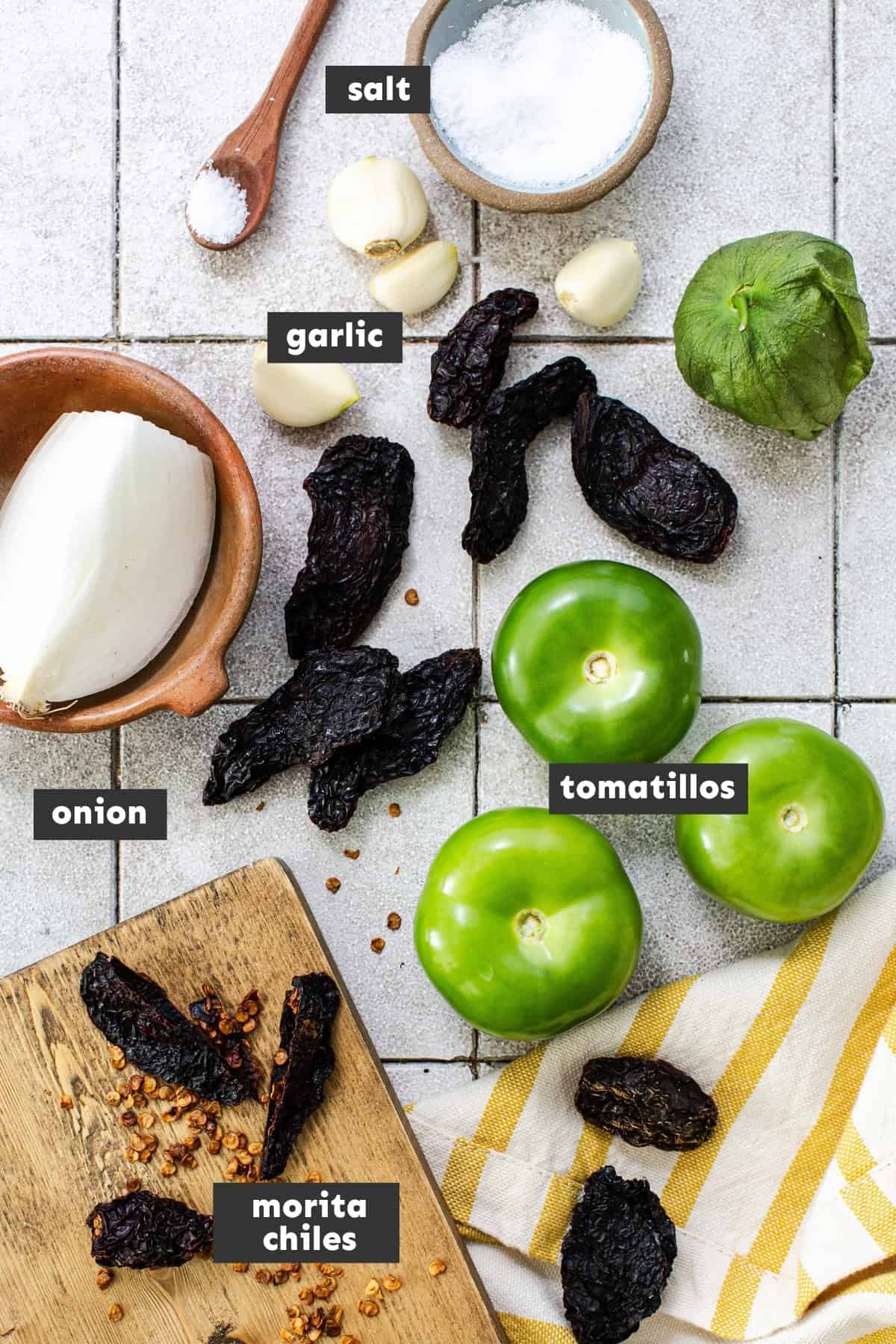
| Ingredient | Why It Works / Notes |
|---|---|
| Morita chiles | The star of the salsa that brings deep, smoky, fruity heat that no other chile can replicate. Even just one chile adds so much depth. Stem and seed them before toasting them to control the heat level. |
| Tomatillos | I like using these instead of tomatoes because their natural acidity cuts through the smokiness of the moritas, creating a more balanced and complex salsa. I roasted the under the broiler until charred for extra depth. |
| White onion | Adds savory depth and a mild sweetness. I roasted it alongside the tomatillos to help mellow its sharpness. |
| Garlic | Adds depth without overpowering the chiles. I roasted them briefly until lightly golden for a sweeter, more rounded flavor. |
Why Tomatillos Instead of Tomatoes?
Most salsa morita recipes use either tomatillos or tomatoes as the base. Both work, but they produce very different results. Tomatoes give the salsa a sweeter, more mellow flavor. Tomatillos add a tanginess that cuts through the smokiness of the moritas in a way that tomatoes just can’t replicate. If you want a slightly sweeter version, you can swap the tomatillos for Roma tomatoes and adjust the consistency with more or less chile soaking liquid.
How to Make Salsa Morita
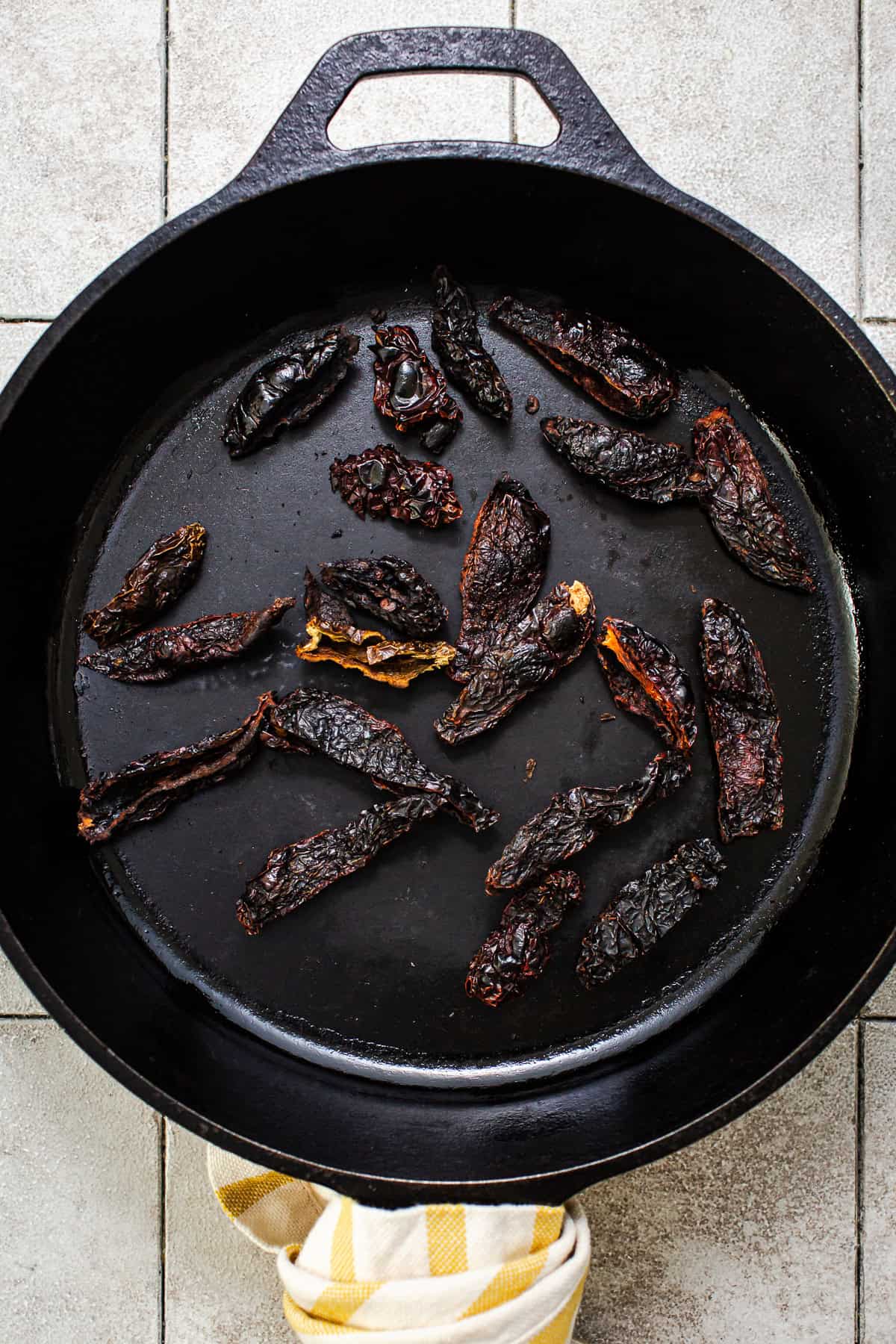
Toast and rehydrate. Press the morita chiles flat in a dry skillet over medium-high heat and toast for 1-2 minutes per side until fragrant and slightly inflated. Watch closely so they don’t burn. Transfer to a small saucepan, cover with water, bring to a boil, then remove from heat and let soften for 10 minutes.
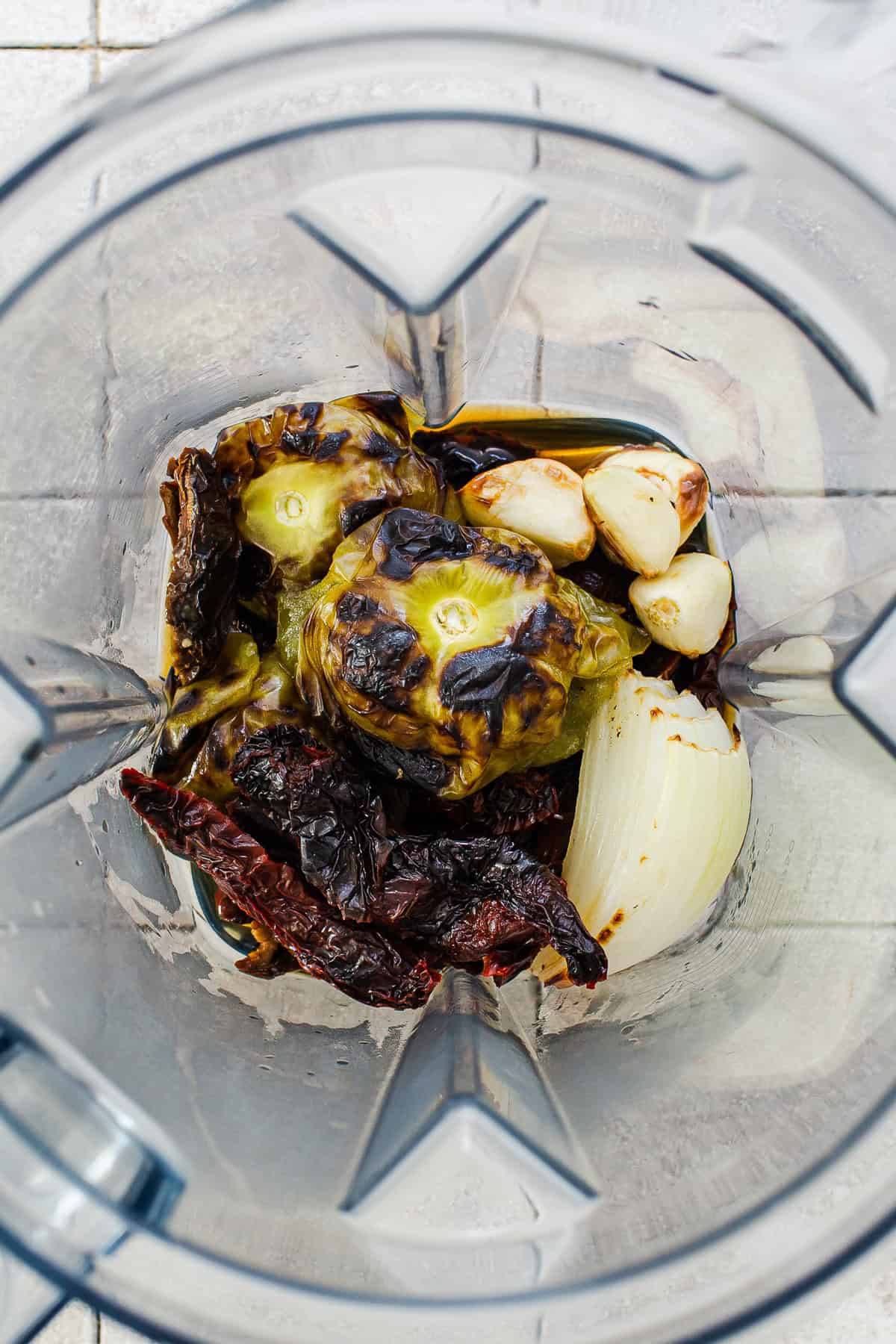
2. Roast and blend. Roast the tomatillos, onion, and garlic until charred, then add them to a blender along with some salt, some of the chile-soaking liquid, and the rehydrated chiles. Pulse until mostly smooth. For a silkier texture, blend longer. For a chunkier salsa, pulse just a few times and stop early. If the salsa is thicker than you’d like, blend in an additional 1-2 tablespoons of chile soaking liquid or water until it reaches your preferred consistency.
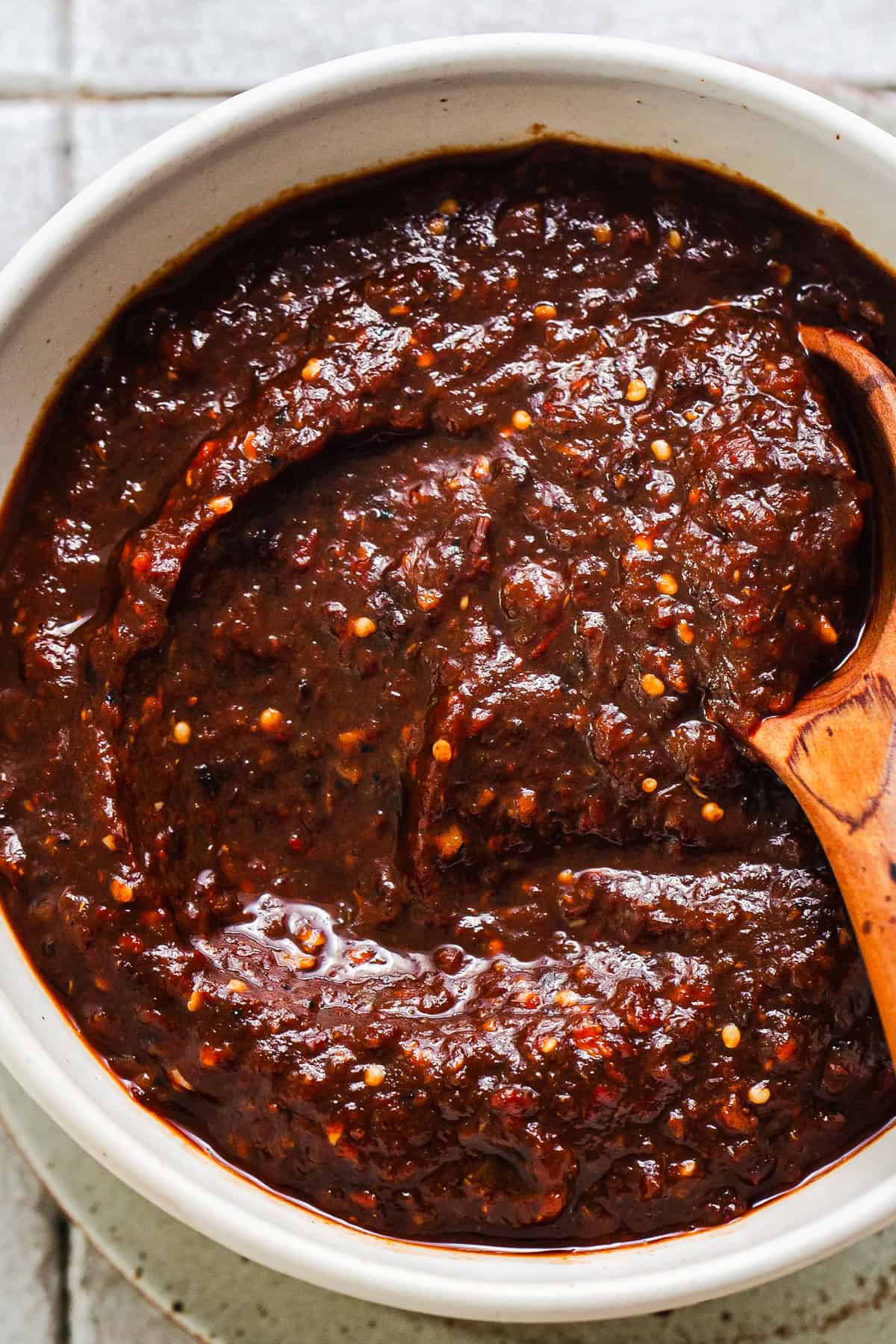
Taste and adjust. Taste the salsa and add more salt if needed. If it’s too spicy, you can blend in a few more roasted tomatillos or even tomatoes if that’s all you have.
I left my salsa fairly thick because I planned on stirring some into soups, but for drizzling on tacos, I typically thin it out a bit more.
Recipe Tips
- Toast the chiles properly. Press the chiles flat against a dry skillet over medium-high heat for about 1-2 minutes per side until they inflate slightly and smell deeply smoky and fragrant. Don’t walk away. They can go from perfectly toasted to burnt quickly, and burnt chiles will make the salsa bitter. I like toasting them in a hot cast-iron skillet, but any skillet or pan will work.
- Adjust the heat. Remove as many seeds as possible before soaking the chiles for a milder salsa. Leave them in for more heat. You can also blend in diced avocado to cool the salsa down if it turns out spicier than expected.
- Let it rest. The salsa improves significantly as it sits. Make it at least 30 minutes before serving if you can, or even the day before.
Ways to Serve Salsa Morita
Salsa morita is one of those salsas you’ll find yourself reaching for all week. Here are some of the best ways to use it:
- Spoon over scrambled eggs or fried eggs for a smoky breakfast
- Drizzle on carne asada tacos, tacos dorados, or even Mexican ceviche for a little spice
- Serve alongside migas, breakfast burritos, or breakfast tacos
- Spoon over grilled or smoked meats like pollo asado or grilled shrimp skewers
- Blend into marinades for an extra smoky layer of flavor
- Drizzle over huevos rancheros instead of a regular salsa roja
Frequently Asked Questions
Store salsa morita in an airtight container or jar and refrigerate for up to 1 week. To freeze, transfer to an airtight container or freezer bag and freeze for up to 3 months. Thaw overnight in the fridge before serving.
They’re closely related but not identical. Both are smoked jalapeños, but moritas are smoked for a shorter time, giving them a softer texture and a slightly fruitier, less intense flavor than chipotles. Chipotles are also more commonly found canned in adobo sauce whereas moritas are almost always sold dried.
Smoky, slightly fruity, and earthy, similar to chipotle peppers but with a softer, less intense smoke and a fruitier finish. They’re deeply fragrant when toasted and add a bold, lingering smokiness to anything they’re added to.
Yes. If you can’t find morita chiles, dried chipotle chiles work well. If you only have canned chipotles in adobo, skip the toasting and rehydrating steps and add them directly to the blender. The flavor will be slightly different but still delicious.
More Salsa Recipes
Salsa Morita
Ingredients
- 1.5 ounces dried morita chiles, (about 8-10 chiles) stemmed and seeded
- ½ pound tomatillos, husked and rinsed
- ¼ medium white onion
- 4 cloves garlic, peeled
- ¼ teaspoon kosher salt, plus more to taste
Instructions
- Heat a comal or cast-iron skillet over medium-high heat. Add the morita chiles and toast for about 1-2 minutes, pressing them down with a spatula so they make good contact with the pan. Flip and toast for another 1-2 minutes, until fragrant and slightly darkened.
- Transfer the chiles to a small saucepan and add enough water to fully cover them. Bring to a boil over high heat, then remove from the heat. Cover and let the chiles soften for about 10 minutes.
- While the chiles soften, position an oven rack near the top of the oven and preheat the broiler to high. Place the tomatillos and onion on a baking sheet and broil for about 8 minutes, flipping halfway through, until charred and softened.
- Add the garlic to the baking sheet and broil for 1-2 more minutes until lightly browned.
- Using a slotted spoon, transfer the softened chiles to a large blender along with ¾ cup of the chile-infused water, the roasted tomatillos, onions, garlic, and salt.
- Pulse until mostly smooth. If the salsa is thicker than you'd like, blend in an additional 2 tablespoons of the chile soaking liquid until it reaches your desired consistency.
- Taste and add more salt if needed. Serve with tortilla chips or spoon over tacos, grilled meats, eggs, or your favorite Mexican dishes.
Notes
- Storage. Store in an airtight container in the fridge for up to 1 week or freeze for up to 3 months.
- Adjust the consistency. For a smoother salsa, puree until mostly smooth. For a chunkier salsa, pulse just a few times and stop early. If the salsa is thicker than you’d like, blend in an additional 2 tablespoons of chile-soaking liquid or water until it reaches your preferred consistency.
- Spice level. This salsa is spicy. If you want it to be medium heat, use 1/2 or 3/4 ounce of chiles. You could also double the amount of tomatillos.
Nutrition
Nutrition information is automatically calculated, so should only be used as an approximation.
Photography by Ashley McLaughlin.









I’ve been looking for a recipe that’s close to what my mother-in-law used to make. She never wrote down a recipe. I used to watch my father-in-law, spread it on warm tortillas and eat them. I followed the recipe exactly except for the chilies. I used around six. I thought it was perfect. I’ve loved all the recipes, I’ve tried of yours Isabel. Thank you for all you do.
This is the closest recipe I’ve seen to the salsa morita I’ve been making for decades. I will try out your ideas. Differences include, I use a whole onion, a whole head of garlic, I don’t soften or seed the moritas, I don’t add water, but I put the juice of a lime in, and I put in a bunch of cilantro. I prefer smaller tomatillos, and I use a couple dozen, no idea how much they weigh. The acid in the lime seems to make it last longer, not that there’s any chance a batch of it will still be around in a week. And I’ve never understood why recipe writers say kosher salt. Yes, it’s easier to pinch. I’ve read getting enough iodine in a person’s diet can increase their IQ by 3 1/2 points. Gracias!
Love this — thank you for sharing how you make yours! The lime juice addition sounds great, and I can see how it would help preserve it (not that it lasts long in my house either!).