

This post may contain affiliate links. Please read our disclosure policy.




This authentic Mexican chile verde is made of tender pieces of pork simmered in a flavorful tomatillo and green chile sauce. This stew is a staple in Mexican cuisine and is best served in a bowl over rice or with homemade tortillas for the best traditional Mexican meal.

Chile verde will always hold a special place in my heart. When I was young, my dad often greeted me after school with a fresh batch of homemade flour tortillas and a bowl of chile verde that had been braising all afternoon. It’s one of my favorite childhood memories.
It’s still a family favorite today (much like my Mom’s chile colorado and carne guisada), and I hope it quickly becomes one for you, too.
What is Chile Verde?
Chile Verde is a traditional Mexican stew made with slow-cooked pork braised in a sauce made from a combination of tomatillos, onions, jalapeños, poblanos, lime juice, cilantro, and garlic.
Roasting the tomatillos, onions, and chiles adds a smokey depth to the sauce that is further enhanced by slowly braising the pork shoulder for a few hours. It’s an explosion of flavor and is incredibly popular throughout Mexico and the southern United States.
It’s a very versatile dish and can be served as a stew, over Mexican rice and pinto beans, or even as tacos in flour or corn tortillas.
Ingredients
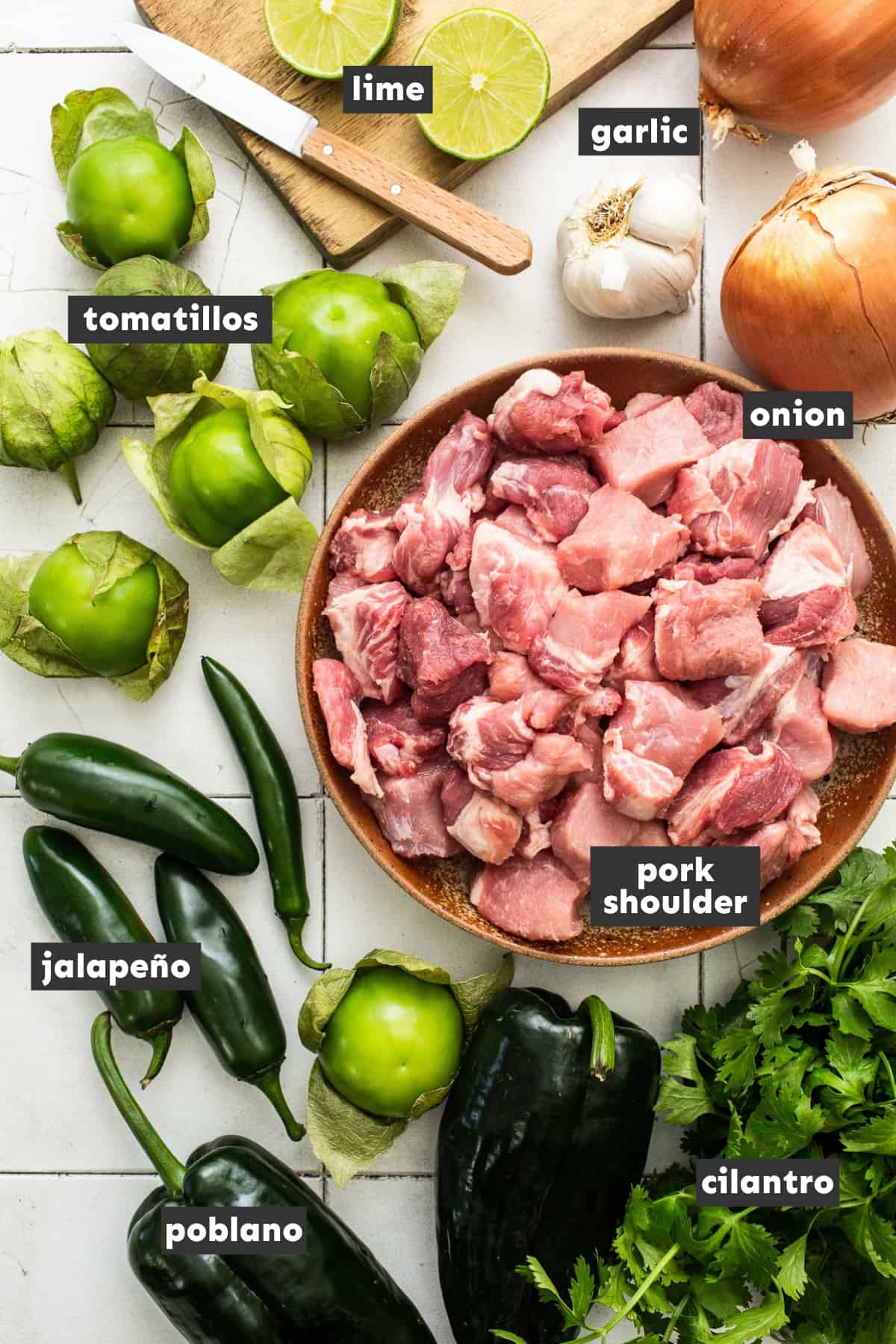
- Tomatillos: The primary flavor builders in this dish. Husked, rinsed, and roasted, they add a tart, bright, and almost citrusy foundation that is the signature of chile verde.
- Jalapeño peppers: It’s not chile verde if it’s not at least a little spicy. Adjust your spice level according to your tastes by leaving in or removing the seeds.
- Poblano peppers: Poblanos help flesh out the depth of pepper flavors without adding much heat.
- Serrano pepper: Like the jalapeños, the serrano helps add heat to the chile verde sauce. Adjust your spice level by removing or leaving in the seeds to meet your taste.
- Onions: Since you’re going to blend the sauce anyway, you only need to halve the onions, saving yourself a few tears on your cook day.
- Garlic: Traditionally, garlic is optional in this recipe, but I can’t live without it. Plenty of authentic versions of this recipe use it and justify keeping it in.
- Boneless pork shoulder: Pork shoulder is a very fatty and easy-to-cook cut of meat. It will easily stand up to the long cooking time of this recipe, and by the end, it will be fork-tender and should fall apart and melt in your mouth. As you’re cubing the meat, trim some of the larger fat caps/deposits, as they’re not likely to render down anyway. Lime juice: This dish can get pretty rich and savory, so a good squeeze of lime does wonders to brighten it up.
- Cilantro: Top this dish off with some cilantro to add another element of bright freshness and keep it balanced from becoming too rich and savory.
How to Make Chile Verde
Roast the tomatillos and peppers. Place the tomatillos, jalapeños, poblanos, and serrano peppers on a baking sheet and stick them under the broiler for about 10-15 minutes, flipping the vegetables halfway through.
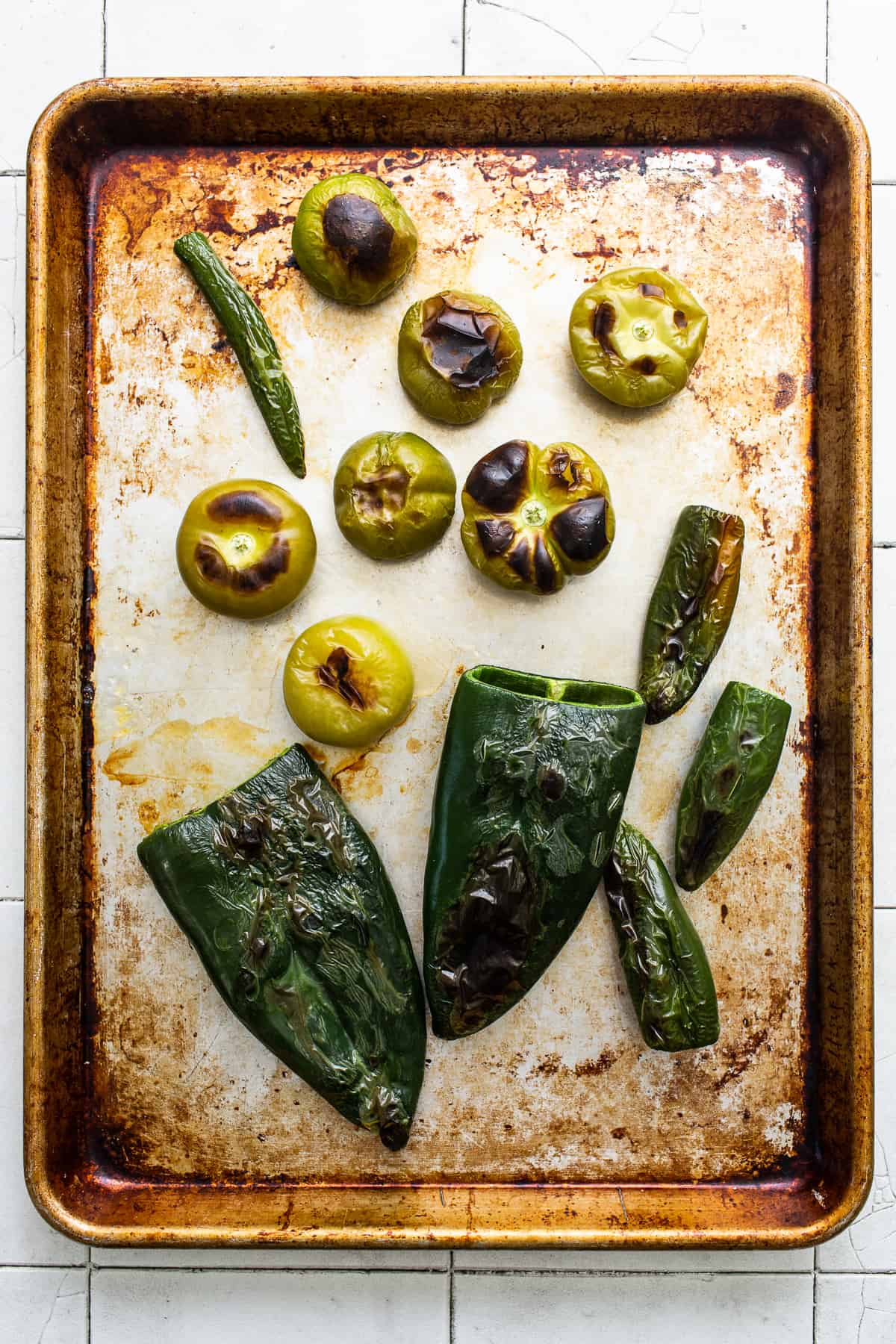
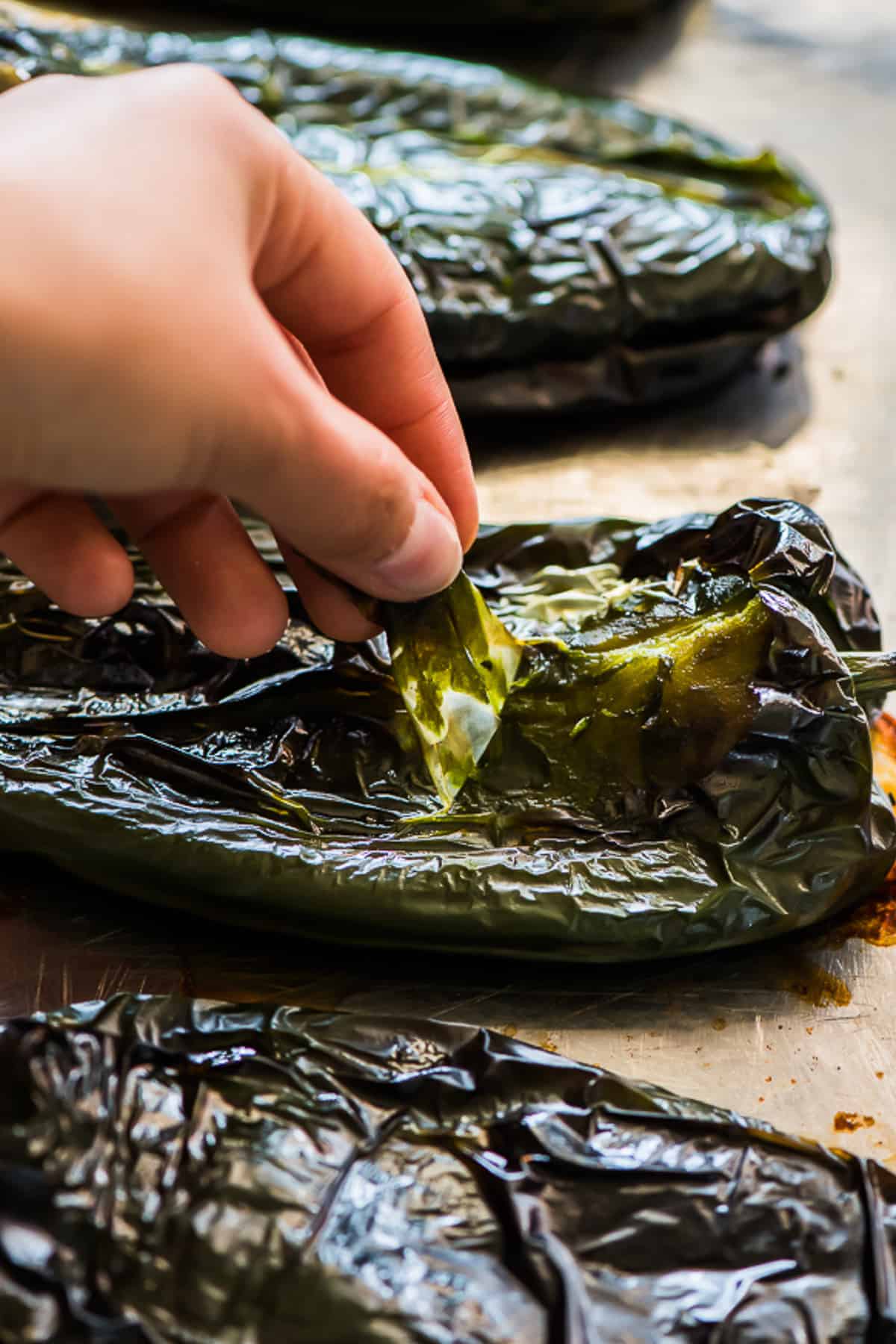
Cover, steam, and peel. Remove the baking sheet from the broiler, cover it with aluminum foil or plastic wrap, and let it sit for 10 minutes to allow steam to build up. This further softens the veggies and makes it easier to peel the skin off.
Remove as much of the skin from the peppers as possible. At this point, you can also remove the seeds from any of the peppers if you don’t want it too spicy.
Blend. Add the tomatillos, peppers, onions, and garlic into a large blender and blend until smooth. Set aside until ready to use.
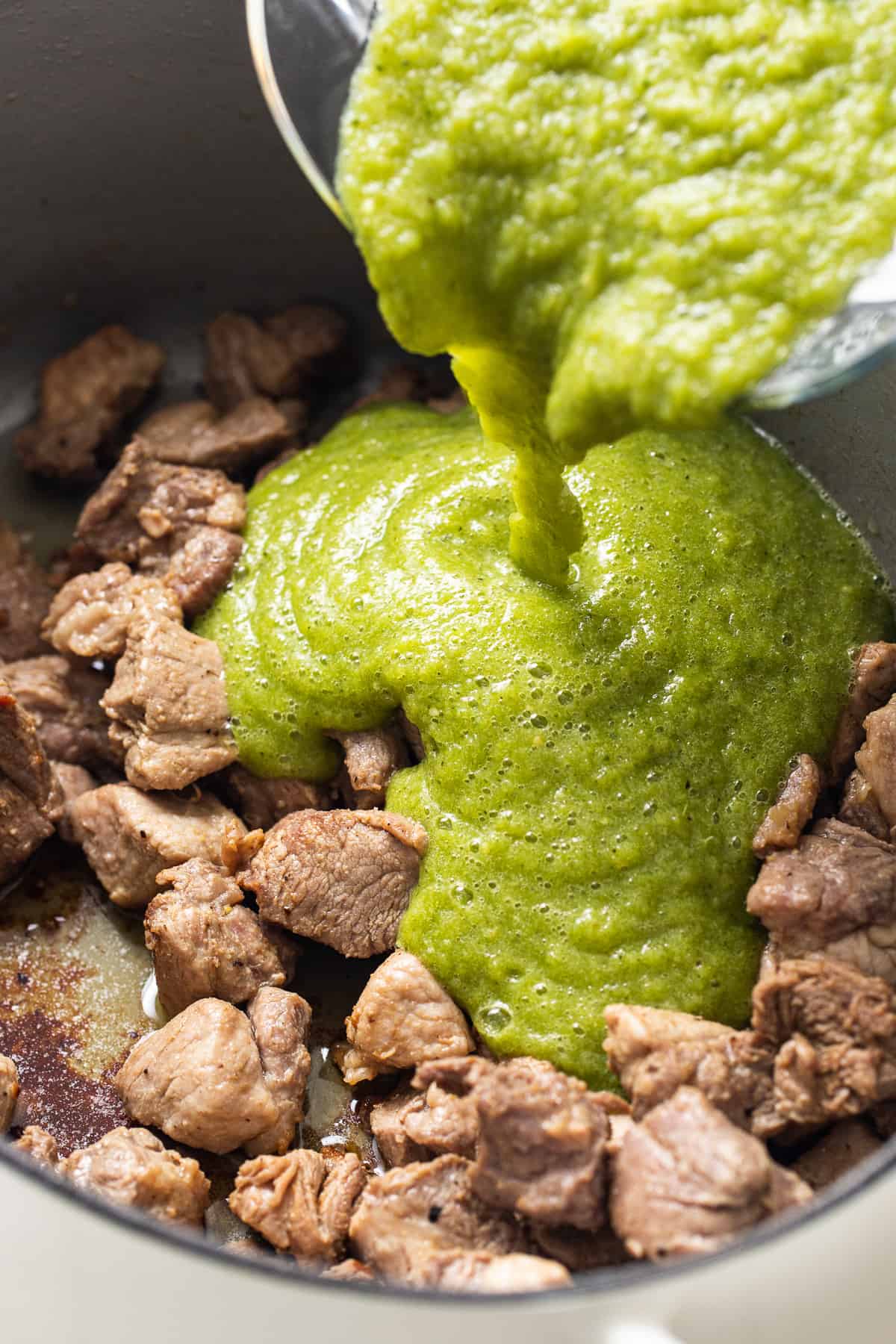
Brown the pork, then simmer with the sauce. Heat some cooking oil in a large pot or Dutch oven over medium-high heat. Add the pork chunks and season generously with salt and black pepper. Cook the meat on all sides until browned, about 10 minutes.
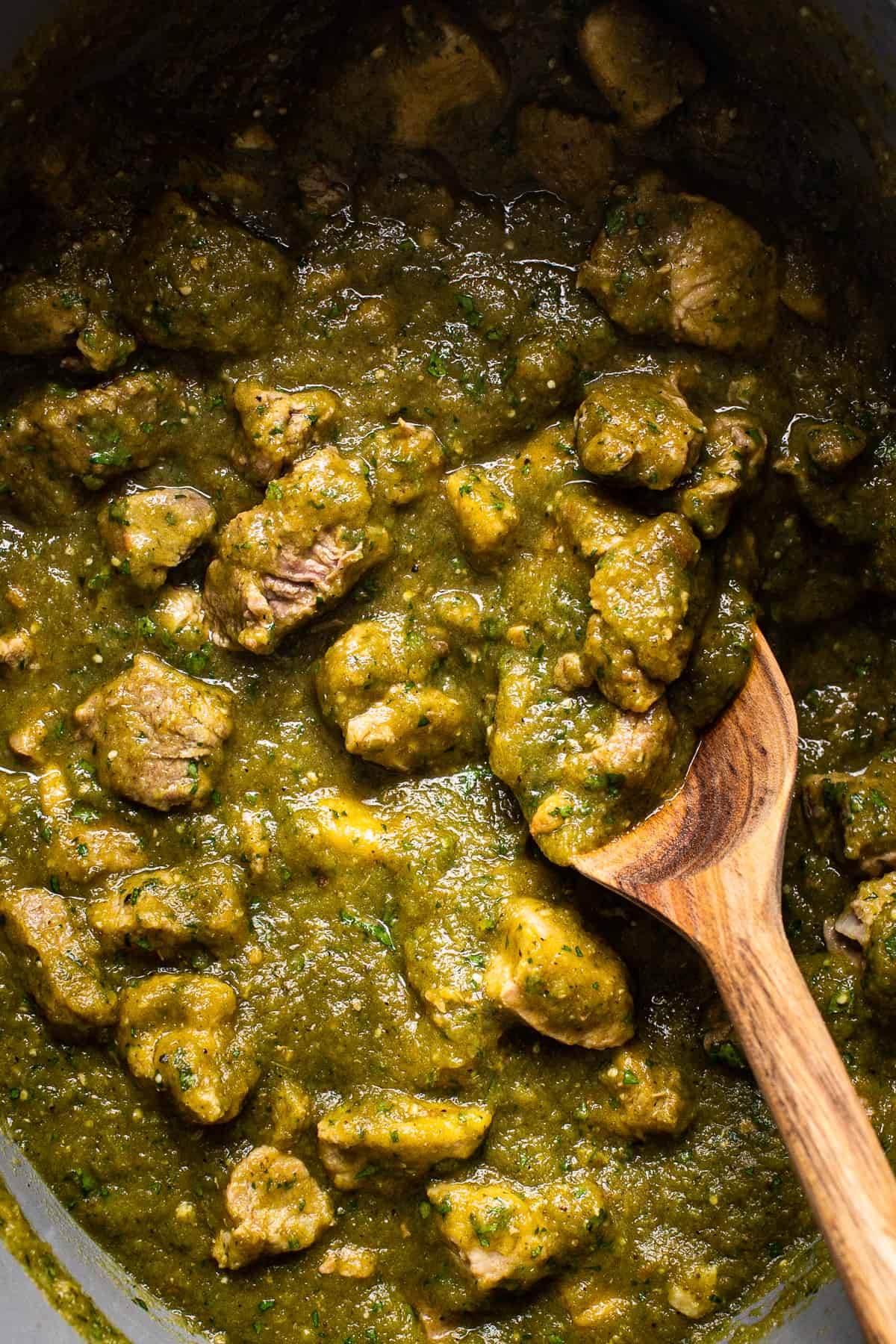
Stir in the blended salsa verde, scraping the bottom of the pot with a wooden spoon so you get all the brown bits. Bring to a simmer, cover, reduce the heat to low, and cook for 2 ½ to 3 hours until the pork is fork tender.
Stir in cilantro and lime juice. Remove the pot from the heat and stir in the lime juice and cilantro. Taste and season with more salt, if needed.
Recipe Tips
- Too thick? If the chile verde is too thick after simmering on the stove, stir in ½ cup of water or chicken stock at a time until it has reached your desired consistency.
- Slow cooker version. You can make this chile verde in the slow cooker by following the instructions for making the sauce and then adding the sauce and pork butt to the slow cooker and cooking on low for 6 to 8 hours or on high for 4 hours. Just be sure the pork is nice and fall apart fork tender, and you’re good to go!
- Make it with chicken. If you don’t want to use pork shoulder for this recipe, try my chicken chile verde which used chicken thighs.
Serving Suggestions
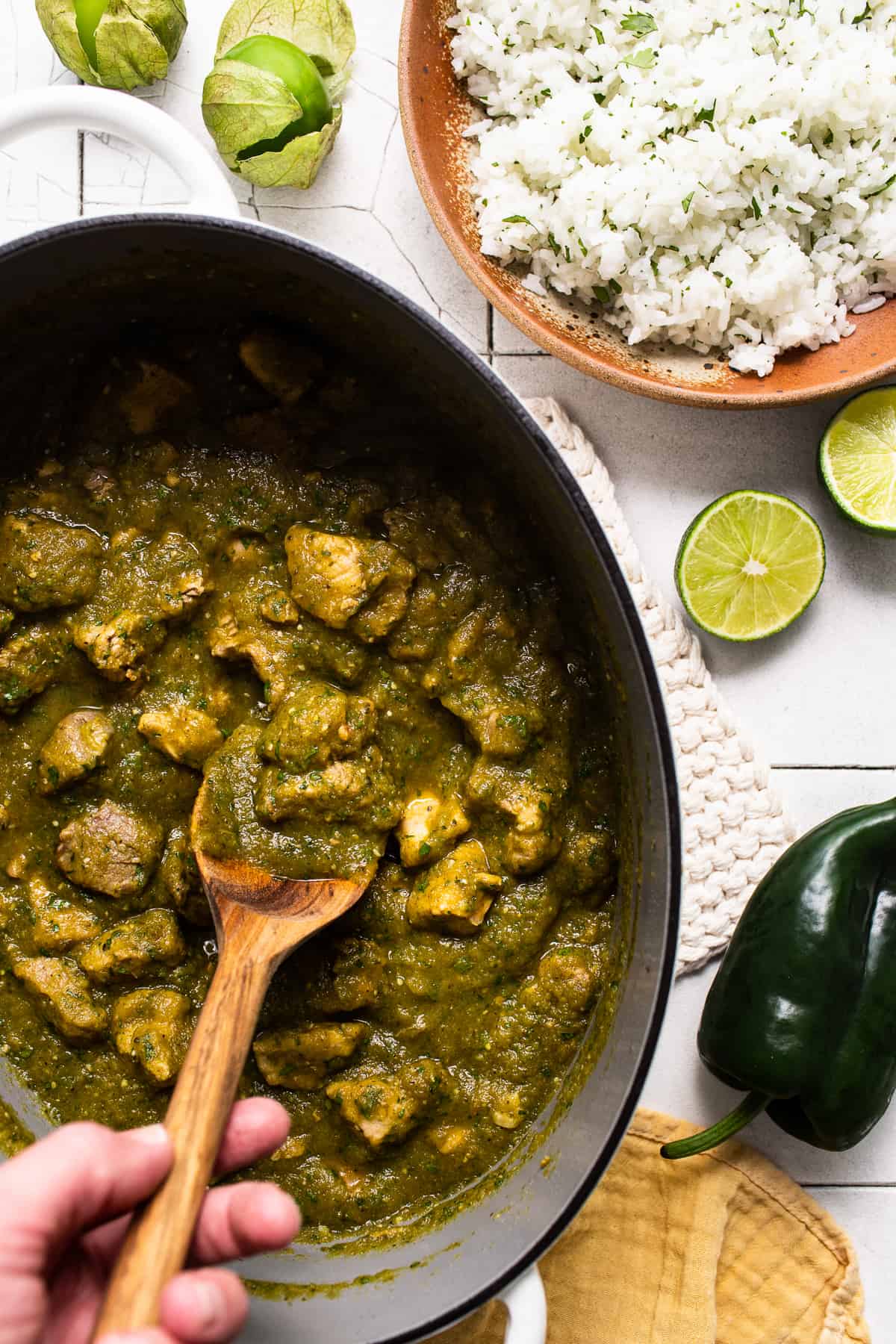
My favorite way to eat chile verde is in a bowl topped with a little cotija cheese or queso fresco, diced white onions, and a couple of warm flour tortillas or tortilla chips on the side. Yum! Here are a few other ideas:
- on a plate with Mexican rice and refried beans
- in a burrito with pinto beans and cheese
- in tacos, gorditas, sopes, or huaraches
- you can also shred the meat and add it to your morning eggs
Storing and Reheating
You can store chile verde in an airtight container in your refrigerator for about 5-7 days or in the freezer for about 3 months.
To freeze, cool the chile verde in the fridge. Once chilled, scoop into freezer-safe storage bags or containers and freeze. When ready to eat, let the frozen container thaw completely in the refrigerator or defrost in the microwave. Reheat on the stove or in the microwave until completely warm.

More Mexican Recipes
If you tried this Chile Verde Recipe or any other recipe on Isabel Eats, don’t forget to rate the recipe and let me know how it went in the comments below! I love hearing about your experience making it!

Chile Verde
Ingredients
- Cooking spray or olive oil, for greasing
- 12-16 ounces tomatillos, husked and rinsed
- 3 jalapeño peppers, stemmed
- 2 large poblano peppers, stemmed
- 1 serrano pepper, stemmed
- 2 medium onions, halved
- 3 cloves garlic
- 2 tablespoons olive oil
- 2 ½ pounds boneless pork shoulder, cut into bite sized chunks
- kosher salt and black pepper, to taste
- 2 tablespoons lime juice (about 1 lime)
- ⅓ cup chopped cilantro
Instructions
- Spray a large baking sheet with nonstick cooking spray or grease with oil. Place the tomatillos, jalapeños, poblanos, and serrano peppers on the baking sheet and place under the broiler. Broil on high for 10 minutes, flipping the vegetables over halfway through.
- Remove the baking sheet from the broiler and cover it with aluminum foil or plastic wrap. Let it sit for 10 minutes. Uncover and remove as much of the skin from the peppers as possible. At this point, you can also remove the seeds from any of the peppers if you don’t want it too spicy.
- Add the tomatillos, peppers, onions, and garlic into a large blender and blend until smooth. Set aside until ready to use.
- Heat the cooking oil in a large pot or Dutch oven over medium-high heat. Add the pork and season generously with salt and black pepper. Cook the meat on all sides until browned, about 10 minutes.
- Stir in the blended tomatillo salsa verde, scraping the bottom of the pot with a wooden spoon so you get all the brown bits. Cover, reduce the heat to low, simmer, and cook for 2 ½ to 3 hours until the pork is tender.
- Remove the pot from the heat and stir in the lime juice and cilantro. Taste and season with more salt, if needed.
- Serve over cilantro lime rice or in a bowl with tortilla chips or warm flour tortillas.
Video
Notes
- Slow cooker version: Follow the instructions for making the sauce, then add the sauce and pork to the slow cooker. Cook on low for 6 to 8 hours or on high for 4 hours.
- Thickness: If the chile verde is too thick after simmering on the stove, stir in 1/2 cup of water at a time until it has reached your desired consistency.
Nutrition
Nutrition information is automatically calculated, so should only be used as an approximation.
This post was originally published in February 2018 and has been updated with new photos and more helpful tips.
Photography by Ashley McLaughlin.











Can this be done in the instant pot?
Hi Belle! We haven’t tried this recipe with an instant pot yet so I’m not sure. You can definitely try it and let us know how it goes!
Great recipe. I used it – sort of. OK, the first mod I made was that I am watching animal fat, so I used pork tenderloin instead of shoulder cut. The ver reason I used it, less fat, means it is a blander meat. So I upped slightly the number of tomatillos, chiles, onions and garlic and also increased the lime juice a bit. Morse spice to add some flavor to compensate for a less flavorful meat. Then first minor catastrophe – my oven died, so I had to saute the vegetables. Second problem. about two hours into cooking the verde, I found I had hidden a poblano behind the cilantor. So saute the poblano until almost cooked, blend it, and then heat the resulting paste and add it to the vered. All these mods none of which are making it taste better, and I was expecting poor results. and even with all that, it turned out delicious, very popular with the people I served it to. Gotta be one of the most forgiving recipes I have ever made. I’m sure doing it right it would be much much better. But delcious, even with so many things that detract from the taste. I part, I guess, more favors from the vegtables covers a multitude of sins.
Hello! Oh my goodness, what an eventful dinner! That’s what is so awesome about cooking, is being able to modify things and having a little bit of wiggle room for errors. Thank you for sharing and for using our recipe!
Love this recipe, make it all the time.
Fantastic andceasy. Have made at least 5 times now…..
Hi Isabel, you have saved .me time and work with your chili Verde recipe. I would husk them and boil them and after would put the brown pork an the tomatillos and a can of diced green Chiles with the pork. Now I will roast the peppers and tomattilos I love “CHIlI VERDE.”
My 4th time with your chile verde recipe–almost got it memorized now! My wife’s a Brit and even she likes it! (I add a little extra garlic and mild green chiles.) I want to try your other dishes too but I just can’t enough enough of the chile verde!
Isabel, you are one of the few bloggers I subscribe to because every recipe I’ve tried so far is a winner. My husband and I live in Mexico and find that your recipes are among the most authentic by English-speakers.
This chili verde is a frequent meal in our house. My husband loves it! I’ve given leftovers to Mexican friends and gotten lots of compliments. Now THAT’S high praise!
The balance between the sharp tomatillos and the rich meatiness is perfect. And the subtle depth from roasting them & the peppers is fabulous. Broilers are rare here, so I use my comal. That’s the only change I make to this great recipe.
Hi Barbara! Using the comal is a great alternative and also gives a great roasted flavor. Thank you for the compliments!
THIS RECIPE???is a KEEPER!!!!
I have made this numerous times and get raves about it every single time. My son in law who is a picky eater even told me I make the best Chili Verde than he has ever had. My son who loves Mexican food said it’s better than any restaurant ones he has eaten. It takes time to make, but worth it.
It is just..Excellent, Easy and Economical. Like I said…A keeper!!
Hi Elizabeth! I’m glad your family enjoyed the recipe!
Excellent 🤗🤗. All your recipes are fantastic. 💖. Thank you 💕.
Absolutely brilliant!!