

This post may contain affiliate links. Please read our disclosure policy.




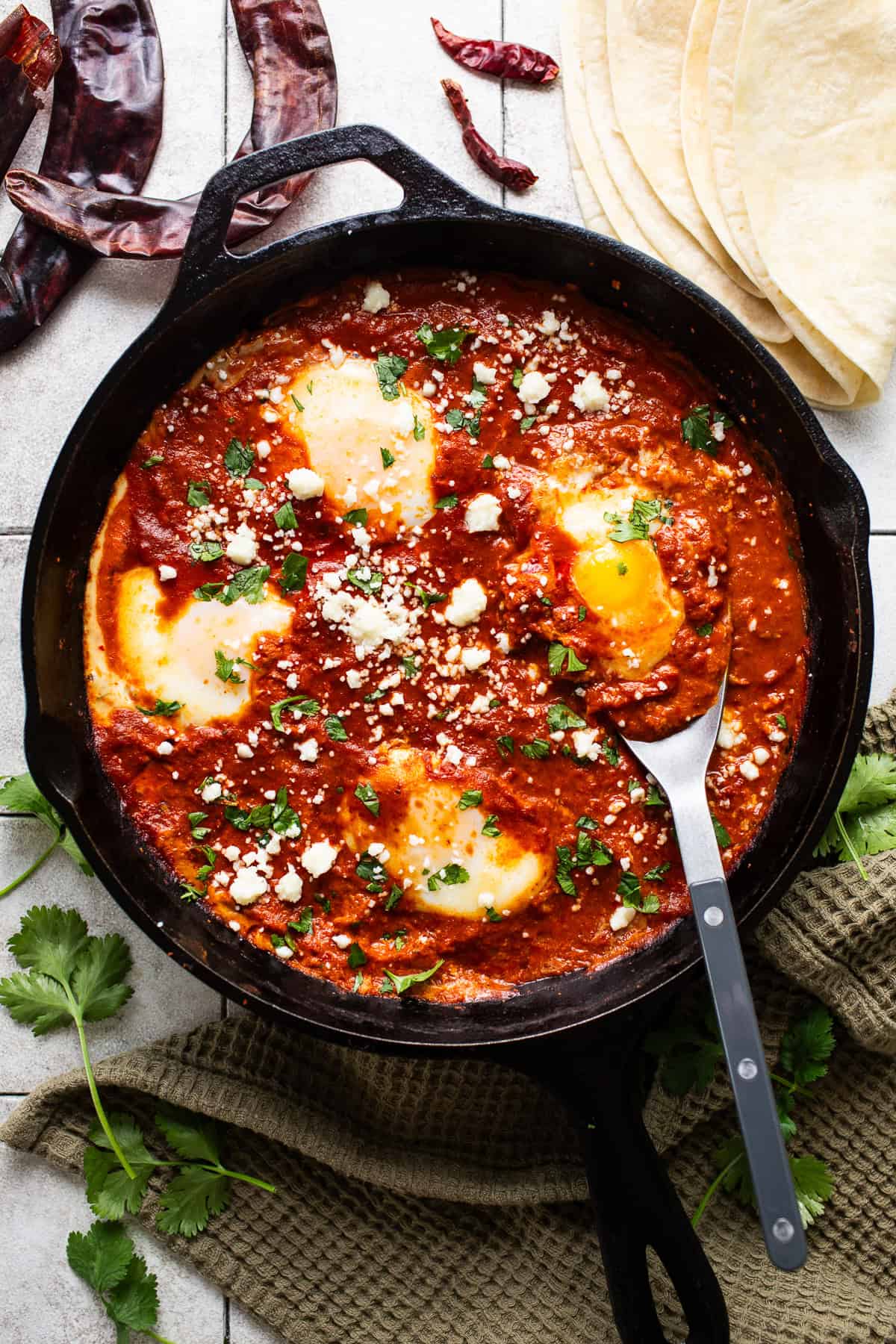
Huevos ahogados, or “drowned eggs,” is a traditional Mexican breakfast made with eggs gently poached in a red salsa of toasted guajillo chiles, Roma tomatoes, onion, garlic, and Mexican oregano.
A Note from Isabel

If you’re the type of person who puts salsa on your eggs (hi, same), then cooking the eggs in the salsa just makes sense. The eggs gently poach right in the simmering sauce, soaking up all that deep chile flavor while the yolks stay perfectly runny.
Huevos ahogados literally translates to “drowned eggs,” and that’s exactly what they are: eggs nestled into a tomato and dried chile salsa and cooked until just set. Every family makes them a little differently. Some use jalapeños, others use dried chiles like guajillos and chile de árbol. This version leans on guajillos for flavor and color, with optional árbol chiles if you want some heat.
Serve them straight out of the skillet with warm tortillas, and you’ve got one of the coziest Mexican breakfasts there is.
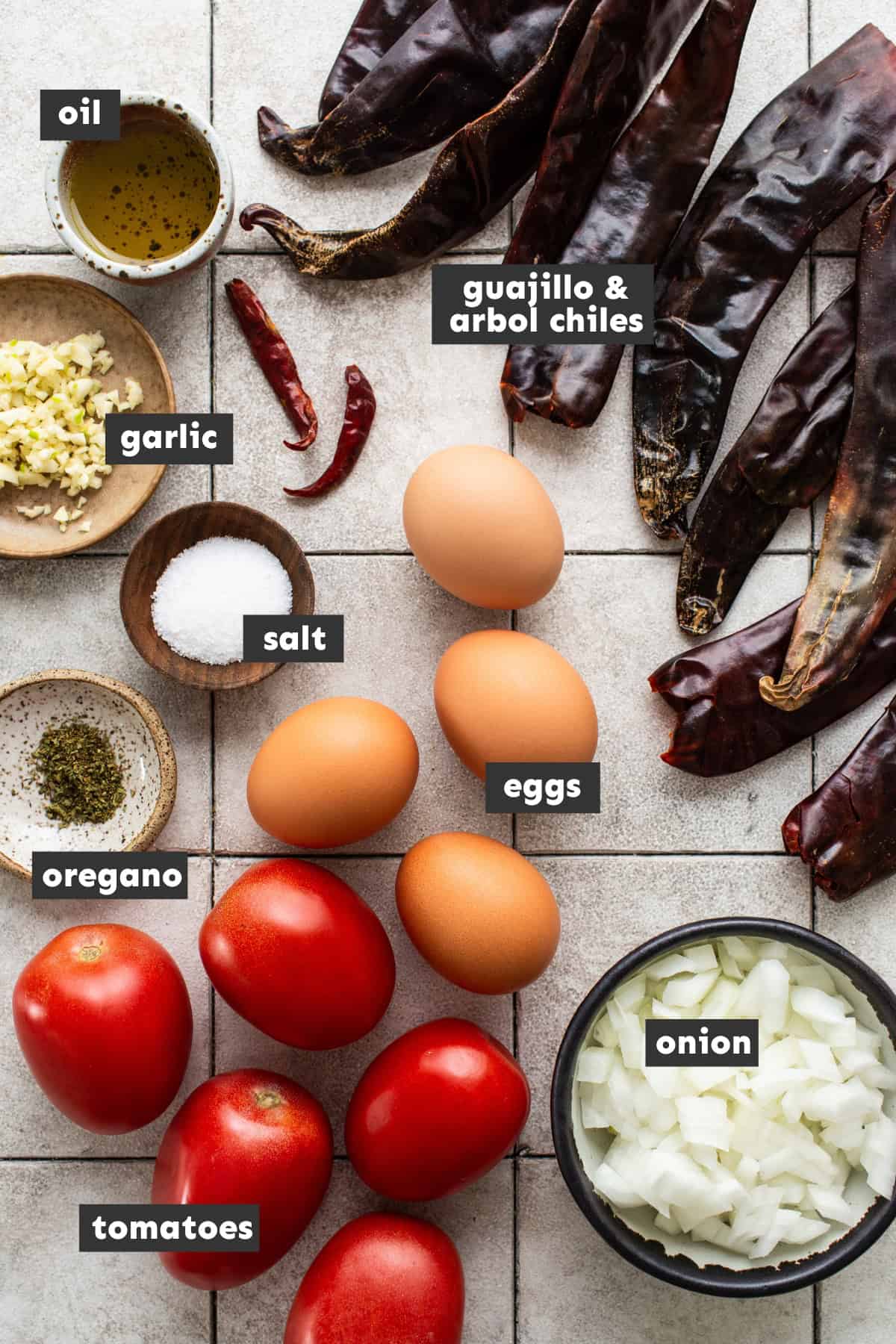
Ingredients You’ll Need
| Ingredient | Why It Works / Notes |
|---|---|
| Guajillo chiles | Mild and slightly sweet with deep chile flavor. They give the salsa its rich red color without making it overly spicy. |
| Árbol chiles (optional) | Adds heat. Use 1-2 for a little kick, more if you like it spicy, or leave them out completely for a mild sauce. |
| Roma tomatoes | The base of the salsa. They add natural sweetness and balance the dried chiles. |
| Onion + garlic | Build classic salsa flavor and add depth once sautéed. |
| Mexican oregano | Adds subtle earthiness that makes the sauce taste authentic. You can use regular oregano if you don’t have the Mexican variety. |
| Eggs | Gently poached right in the sauce for tender whites and jammy yolks. If you prefer your eggs fully cooked through, you can simmer them for a little longer. |
How to Make Huevos Ahogados
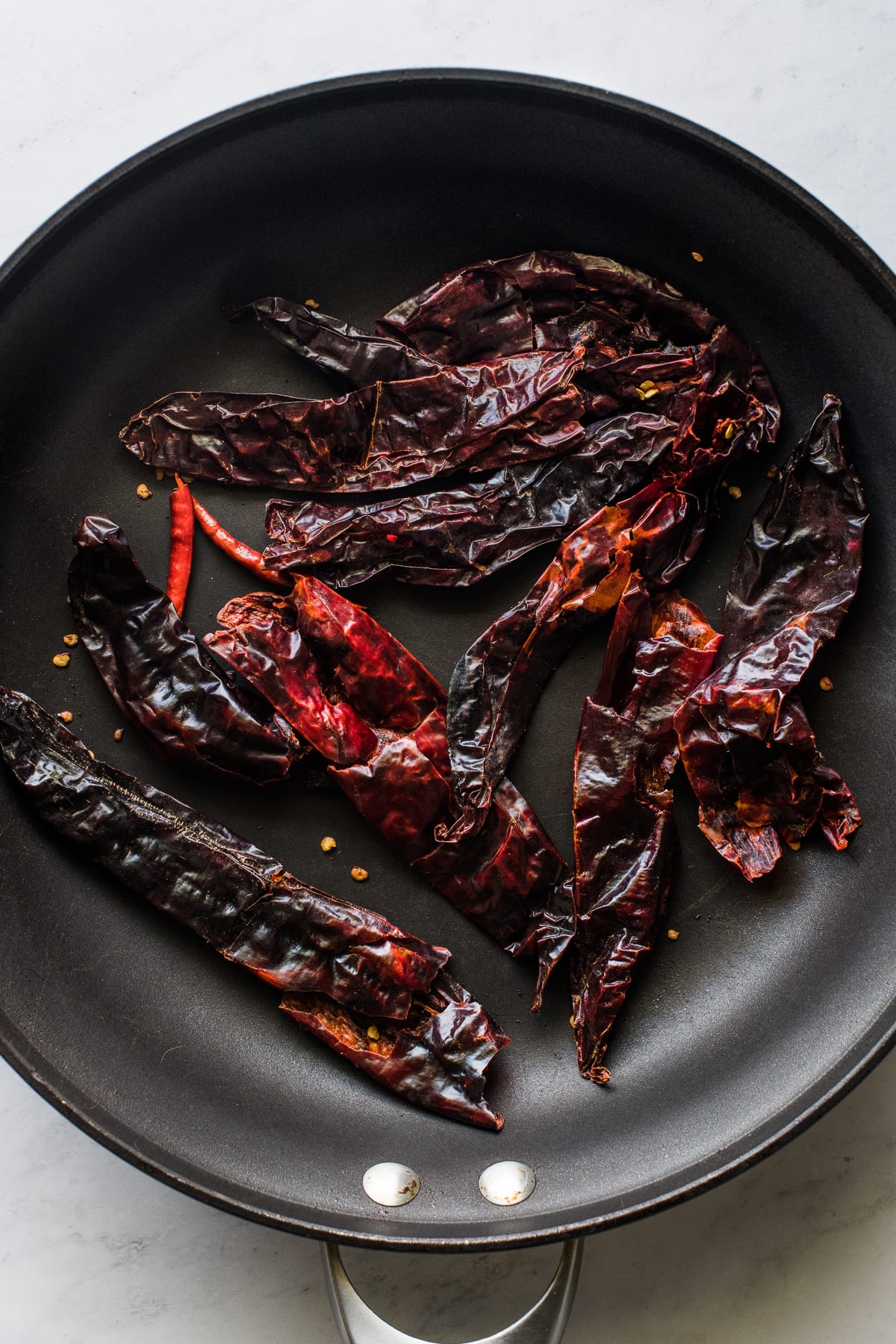
Toast and rehydrate the chiles. Toast the guajillo and árbol chiles in a dry skillet until fragrant, about 1 minute. This brings out their flavor. Then simmer them with the tomatoes in water until softened.
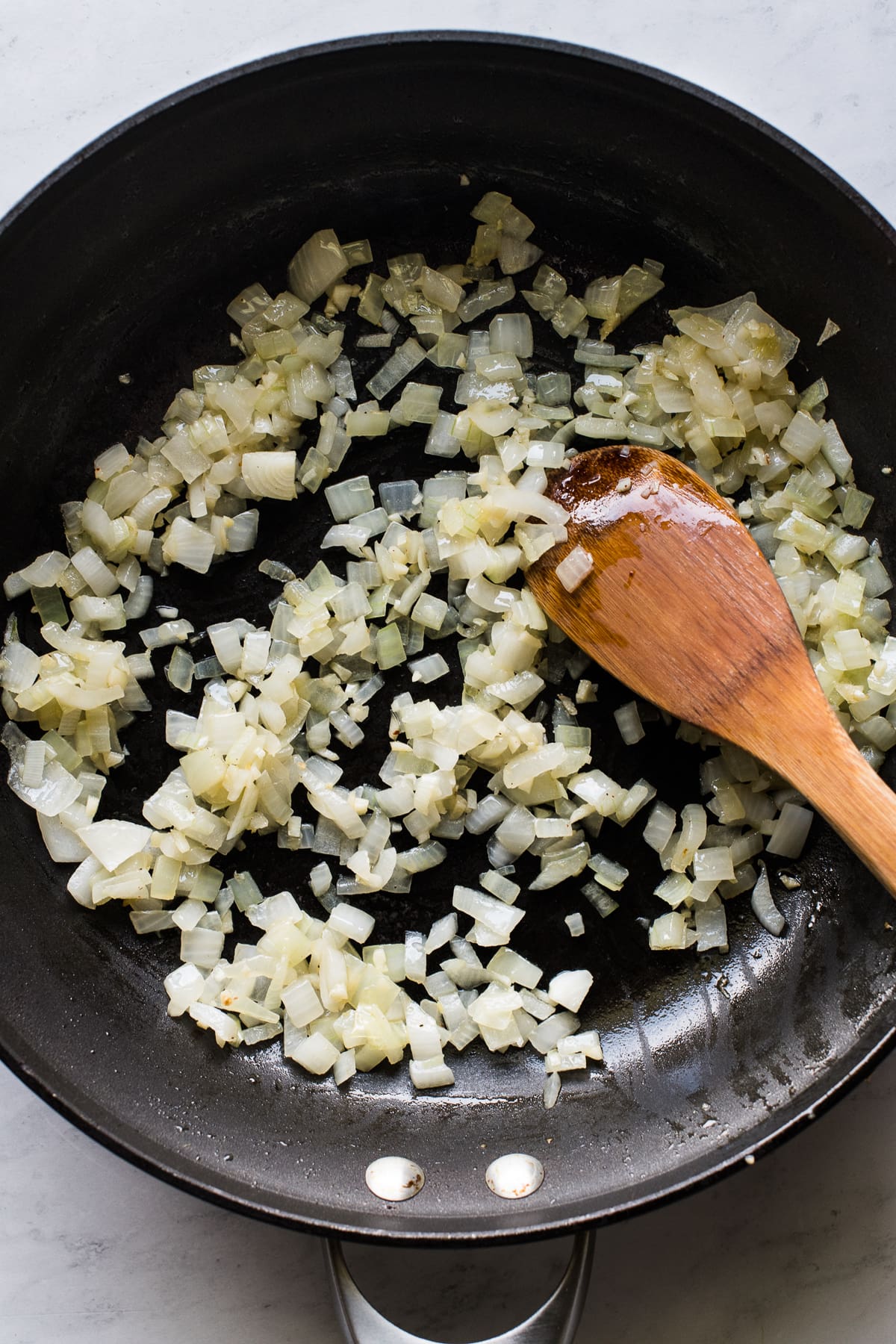
Sauté the aromatics. While the chiles soak, sauté the onion and garlic in olive oil until soft and fragrant.
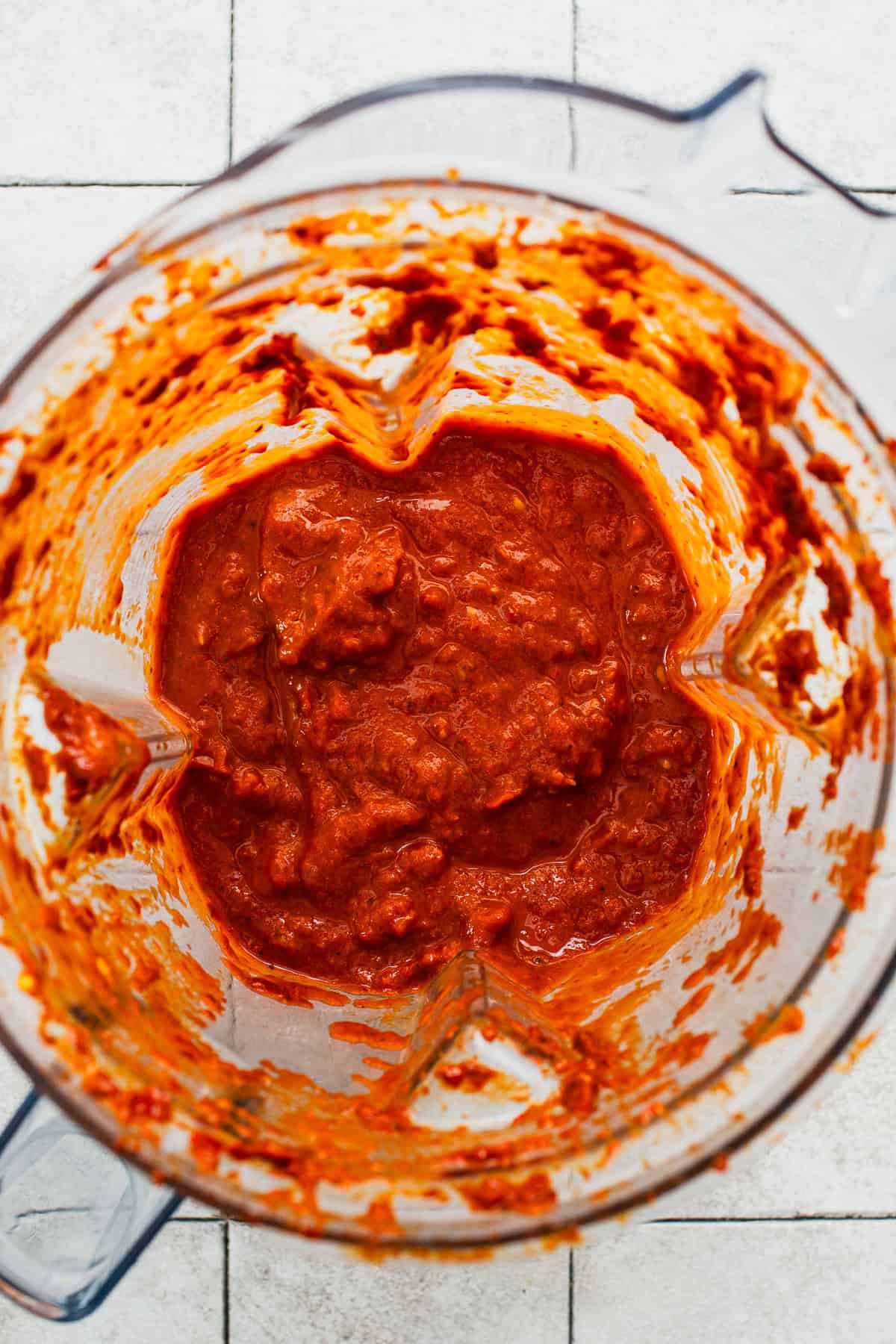
Blend the salsa. Add the softened chiles, tomatoes, sautéed onion and garlic, salt, and oregano to a blender. Blend until smooth or pulse for a more rustic texture.
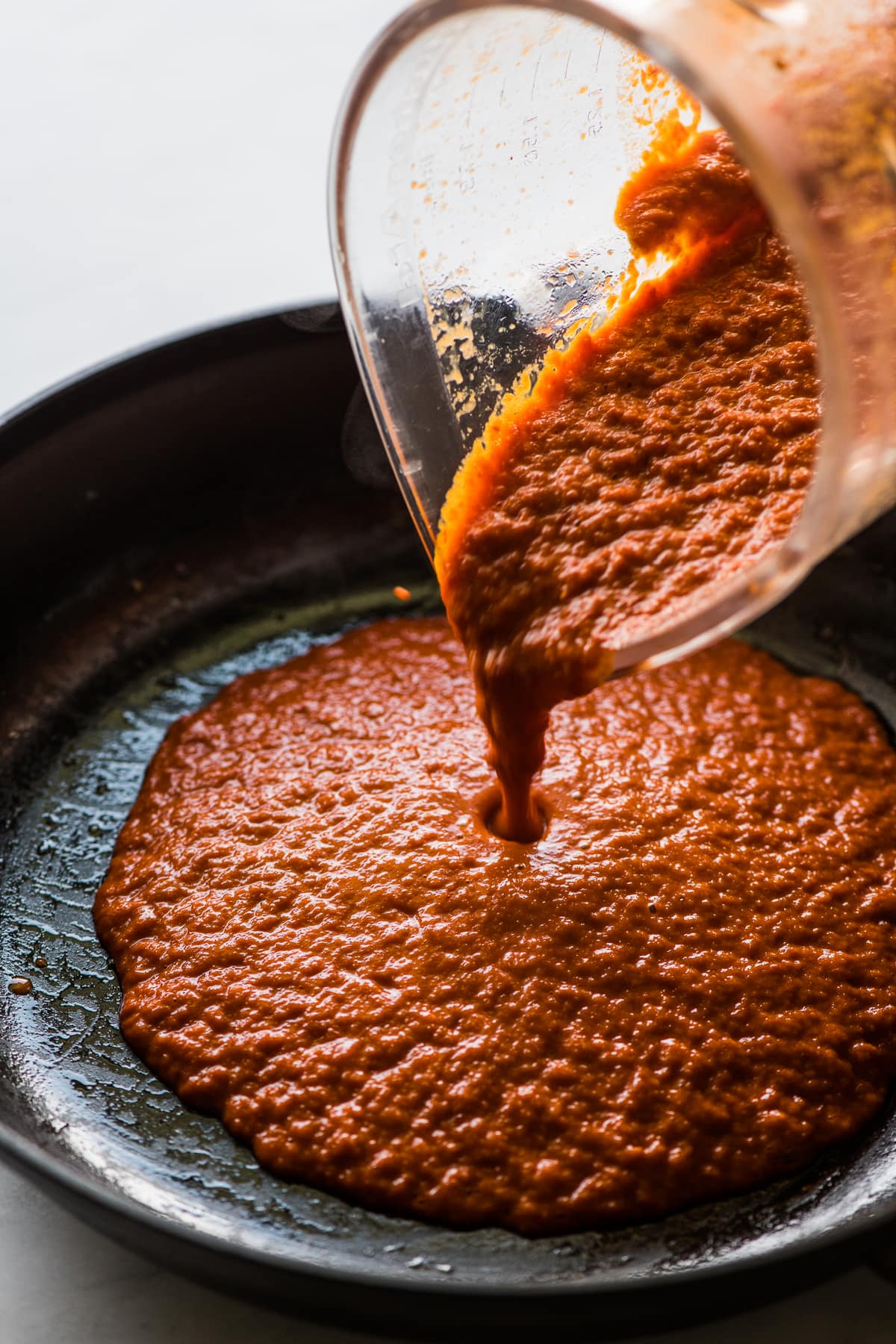
Simmer the sauce. Pour the salsa back into the skillet and simmer for a minute to let the flavors come together.
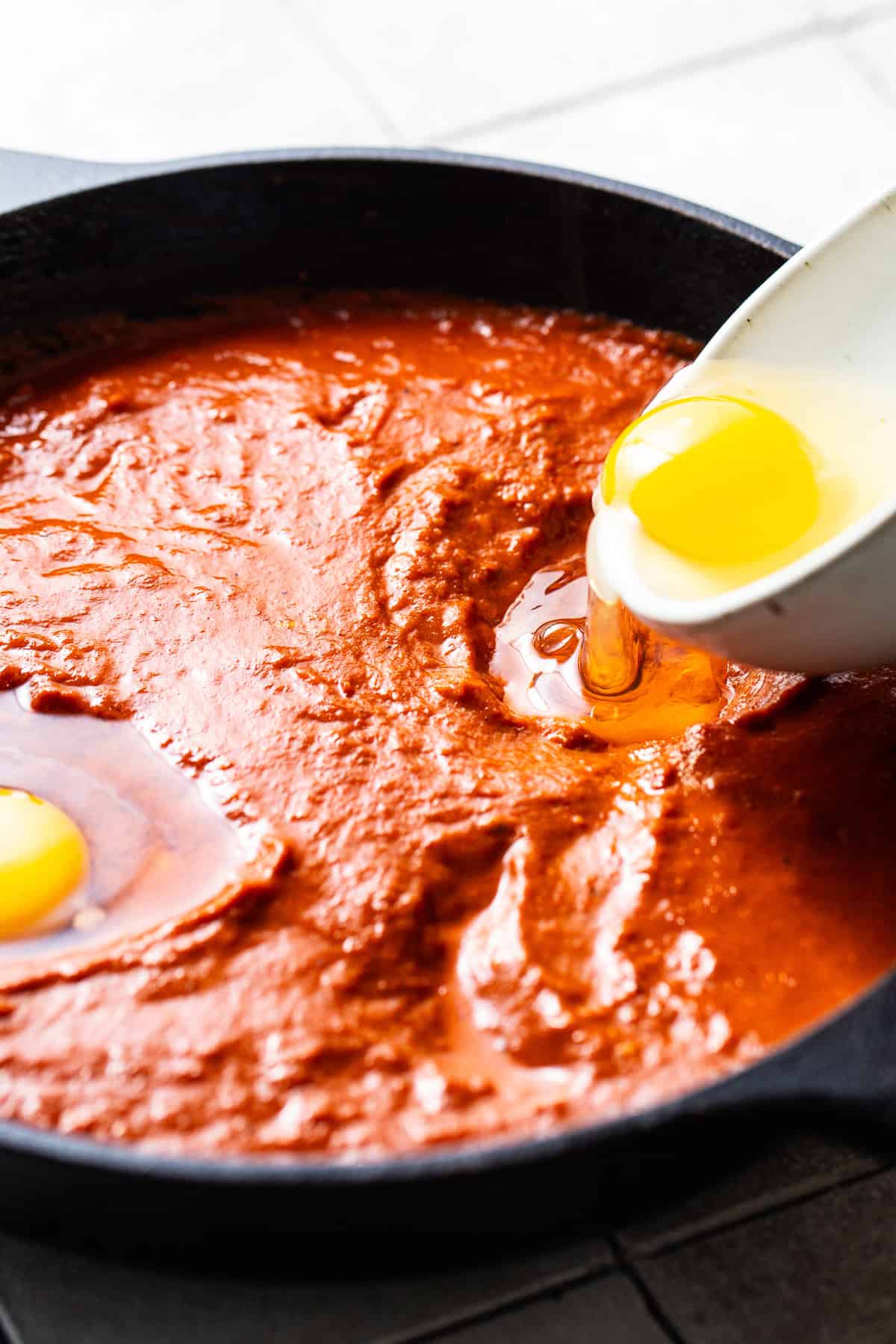
Add the eggs. Make small wells in the sauce and crack an egg into each one. Cover and cook until the whites are set and the yolks are cooked to your liking, about 7–10 minutes.
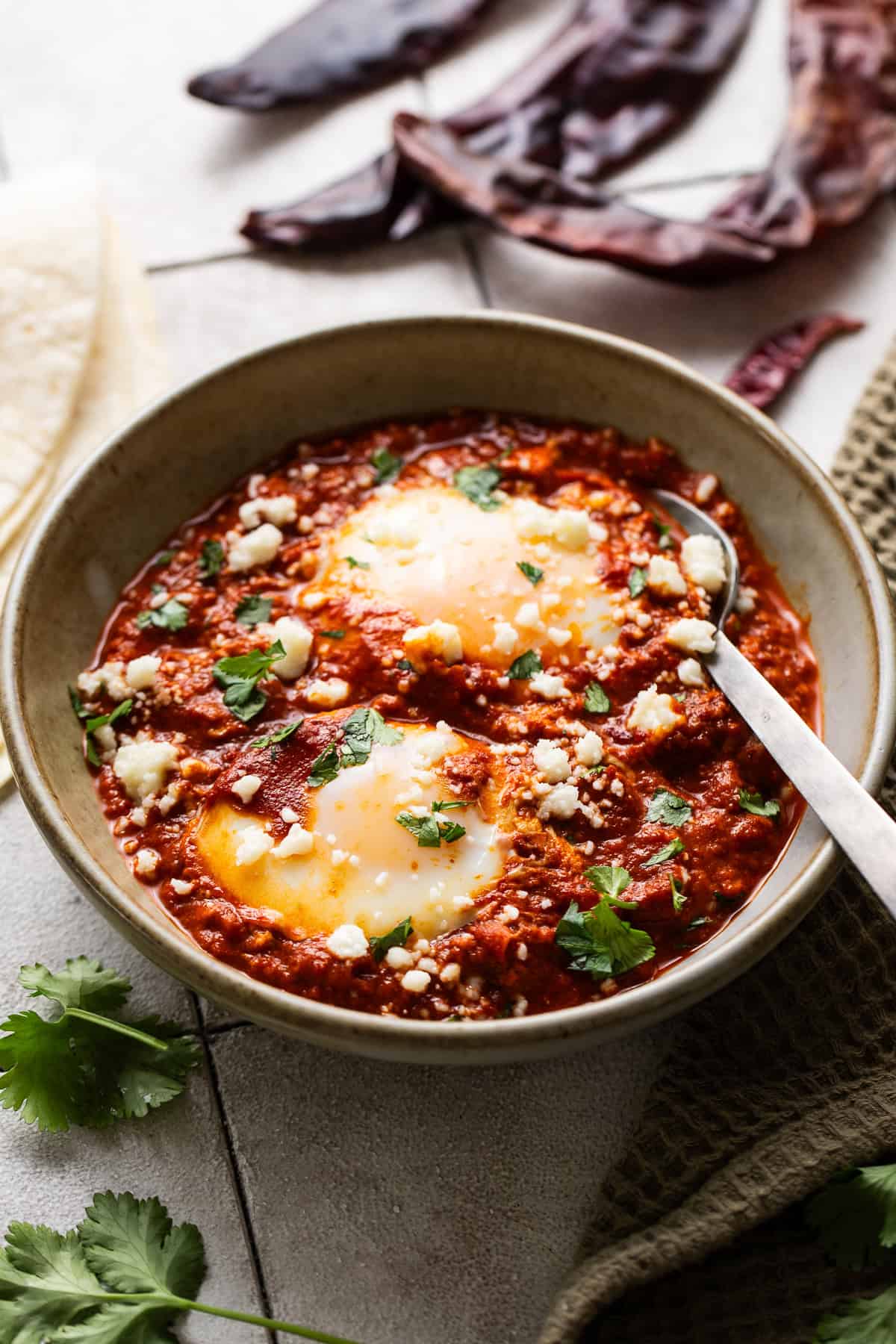
Garnish and serve. Top with chopped cilantro and crumbled queso fresco. Serve immediately with warm flour tortillas, corn tortillas, bolillo bread, or telera bread.
Tips and Substitutions
- Control the heat. This sauce is very forgiving. Give it a taste once it’s blended. If it’s not spicy enough, add an árbol chile. If it’s too spicy, add in another tomato.
- Huevos ahogados are best eaten immediately. If you do have leftovers, store them in an airtight container in the fridge for up to 2 days. You can reheat them in the microwave in intervals of 30 seconds to make sure the eggs don’t get rubbery.
- Make ahead. Prepare the salsa ahead of time, then poach the eggs in the salsa when you’re ready to eat for a delicious breakfast in under 15 minutes.
- Like it smoky? Add 1 chipotle pepper in adobo to the blender for a smoky twist.
- Use a different salsa. Huevos ahogados are usually made with a roasted salsa from either fresh tomatoes, chiles, and onions, or toasted dried chiles. If you’re in a pinch, you can use your favorite store-bought roasted salsa or this roasted tomato salsa.
Frequently Asked Questions
Cook them low and slow. Once the eggs are in the salsa, reduce the heat to low and cover the skillet. Start checking around 7 minutes. Pull them off the heat when the whites are set but the yolks are still how you like them. They’ll continue cooking slightly from the residual heat.
Cook them low and slow. Once the eggs are in the salsa, reduce the heat to low and cover the skillet. Start checking around 7 minutes. Pull them off the heat when the whites are set but the yolks are still how you like them. They’ll continue cooking slightly from the residual heat.
Huevos rancheros are fried eggs served on tortillas with salsa on top. Huevos ahogados are poached directly in the salsa. The eggs cook in the sauce, which makes them extra flavorful and saucy.
Warm flour tortillas are my favorite for scooping everything up. Corn tortillas, crusty bread, or toast also work great. Add refried beans or sliced avocado if you want to make it a bigger meal.
They’re similar in that both dishes feature eggs cooked directly in a simmering sauce. The big difference is the flavor profile. Shakshuka is typically made with tomatoes, bell peppers, and warm spices like cumin and paprika, while huevos ahogados are cooked in a Mexican red salsa made from dried chiles, tomatoes, garlic, and Mexican oregano. Same concept, totally different flavor.
More Recipes To Try
Huevos Ahogados
Ingredients
- 10 guajillo chiles, stemmed and seeded (about 2 ounces)
- 2 árbol chiles, stemmed (optional)
- 5 large Roma tomatoes
- 2 tablespoons olive oil
- ½ large white onion, diced
- 3 cloves garlic, minced
- ½ tablespoon kosher salt, plus more to taste
- ¼ teaspoon dried Mexican oregano
- 4 large eggs
- For topping: chopped cilantro, crumbled queso fresco or cotija cheese
Instructions
- Add the guajillo and árbol chiles to a medium skillet over medium heat. Toast until fragrant, flipping occasionally, about 1 minute. Transfer to a small pot.
- Add the tomatoes and fill the pot with water until the tomatoes are completely covered. Bring to a boil over high heat, reduce the heat to low, cover, and simmer for 2 minutes. Remove the pot from heat and let sit for 5 minutes to soften and rehydrate.
- While the chiles and tomatoes are soaking, heat the olive oil in the same medium skillet over medium-high heat. Add the onions and garlic, and cook for 5 minutes, stirring occasionally. Remove from the heat and transfer to a large blender.
- Add ½ cup of the chile cooking water, the rehydrated chiles, salt, and oregano to the blender. Blend until smooth.
- Add the cooked tomatoes and pulse a few times for a chunky and rustic sauce, or blend completely for a smooth sauce. This is all personal preference.
- Pour the sauce back into the same medium skillet and cook for 1 minute over medium heat, stirring often, then reduce the heat to low.
- Use a spoon to make 4 small wells in the sauce and crack an egg into each well.
- Cover and cook for 7-10 minutes until the egg whites are no longer clear and the yolks are cooked to your liking.
- Garnish with desired toppings and with warm flour tortillas or toast.
Video
Notes
- Árbol chiles. These are optional as they add some spice. If you prefer a medium heat level, omit them. If you want a little more spice, use 4-5. Add some smokiness by leaving out the árbol chiles and adding 1 or 2 chipotle peppers in adobo sauce to the blender with the other ingredients.
- Make ahead. Prepare the salsa ahead of time then poach the eggs in the salsa when you’re ready to eat for a delicious breakfast in under 15 minutes!
- Storing and reheating. If you have leftovers, store them in an airtight container in the fridge for up to 2 days. You can reheat them in the microwave in intervals of 30 seconds to make sure the eggs don’t get rubbery.
Nutrition
Nutrition information is automatically calculated, so should only be used as an approximation.
Photography by Ashley McLaughlin.
This post was originally published in September 2020 and has been updated with new photos and more helpful tips.











I make my own chorizo from ground pork (because I like meat in it instead of saliva glands) I used about 1/2 pound that was cooked with the salsa. Also I added about a half teaspoon of cumin. It was delicious!
Do you have a suggestion for a way to do this without a blender? Specifically referring to the dried guajillo chiles. I figure with the tomatoes I can just smash them a bit after simmering and maybe add some tomato sauce if needed. But the chiles have me guessing…
Hi David! After the chiles have soaked, they’re really soft and pliable and easy to mash. You should be able to smash them along with the tomatoes!
my mom use to make a fish soap, I thought it was made with catfish? I also thought it had chunks of potatoes. Do you have anything like this?
Gracias
Hi Alonzo! I think I know what you’re referring to! I think you’re thinking of Caldo de pescado or Caldo siete mares. We don’t have that recipe on the blog just yet, but you should be able to find a recipe for it on another food blog!
Caldo de Oso?
lol, at first glance I thought the recipe was for “huevos albondigas” 🙂
Not even sure what that would be, so probably why it caught my eye!
Haven’t tried it yet, but can’t wait (need to get to the store for some ingredients first…)
Can you post the recipe for soapa de aho my favorite soup thanks, Francis
This is a must try for sure! Thanks for sharing!