

This post may contain affiliate links. Please read our disclosure policy.



This authentic Mexican chile verde is made of tender pieces of pork simmered in a flavorful tomatillo and green chile salsa. This stew is a staple all over Mexico and is best served in a bowl over rice or with homemade tortillas for a real traditional Mexican meal.
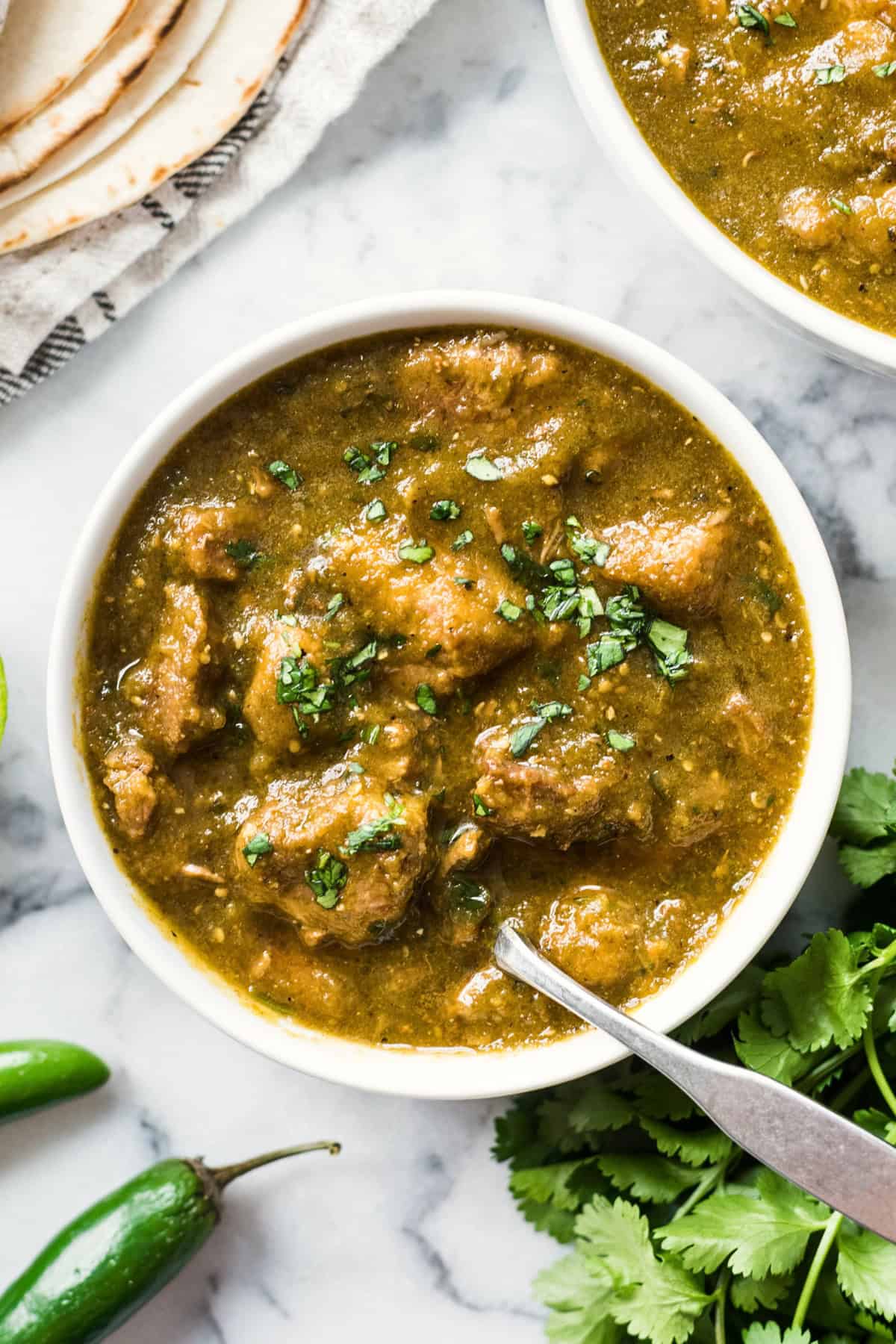
A Note from Isabel

Chile verde will always hold a special place in my heart. When I was young, my dad often greeted me after school with a fresh batch of homemade flour tortillas and a bowl of chile verde that had been braising all afternoon. It’s one of my favorite childhood memories.
It’s still a family favorite today (much like my Mom’s chile colorado and carne guisada), and I hope it quickly becomes one for you, too.
What Is Chile Verde?
Chile verde is a traditional Mexican stew made with slow-cooked pork braised in a sauce made from a combination of tomatillos, onions, jalapeños, poblanos, lime juice, cilantro, and garlic.
Roasting the tomatillos, onions, and chiles adds a smokey depth to the sauce that is further enhanced by slowly braising the pork shoulder for a few hours. It’s an explosion of flavor and is incredibly popular throughout Mexico and the southern United States.
It’s a very versatile dish and can be served as a stew, over Mexican rice and pinto beans, or even as tacos or burritos in flour tortillas or corn tortillas.
Ingredients You’ll Need
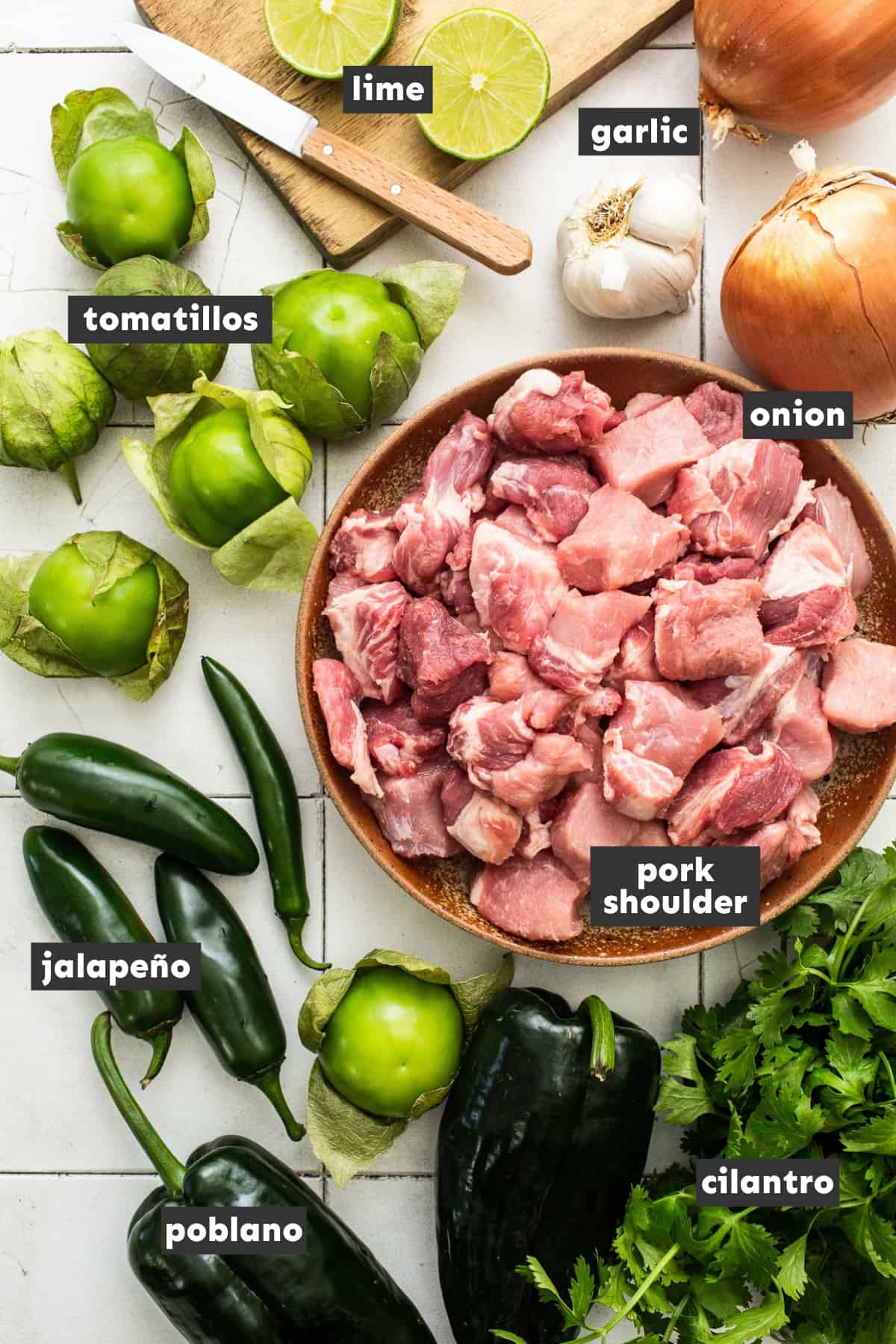
- Tomatillos: The star of the sauce. Once you husk, rinse, and roast them, they give the chile verde that tangy, almost citrusy flavor that makes it what it is. Bought too many? Here’s what to do with tomatillos.
- Jalapeño peppers: It’s not chile verde if it’s not at least a little spicy. Adjust your spice level according to your tastes by leaving in or removing the seeds.
- Poblano peppers: Poblanos add a nice green pepper flavor without too much heat. Of course, some peppers are spicier than others, so feel free to remove the seeds if yours are on the spicier side.
- Serrano pepper: Like the jalapeños, the serrano helps add heat to the chile verde sauce. Skip it if you want things milder.
- Onions and garlic: Since everything gets blended anyway, you can just halve the onions and toss in whole garlic cloves. No fine chopping needed. Some folks skip the garlic, but I never do. It adds a savory depth to the sauce that’s worth it.
- Boneless pork shoulder: Pork shoulder is a very fatty and easy-to-cook cut of meat. It will easily stand up to the long cooking time of this recipe, and by the end, it will be fork-tender and should fall apart and melt in your mouth. As you’re cubing the meat, trim some of the larger fat caps/deposits, as they’re not likely to render down anyway.
- Lime juice and cilantro: Both go in at the very end to freshen everything up. The stew gets rich and savory as it braises, so a good squeeze of lime and a handful of cilantro brighten it right back up. These are optional, but I highly recommend stirring them in.
How to Make Chile Verde
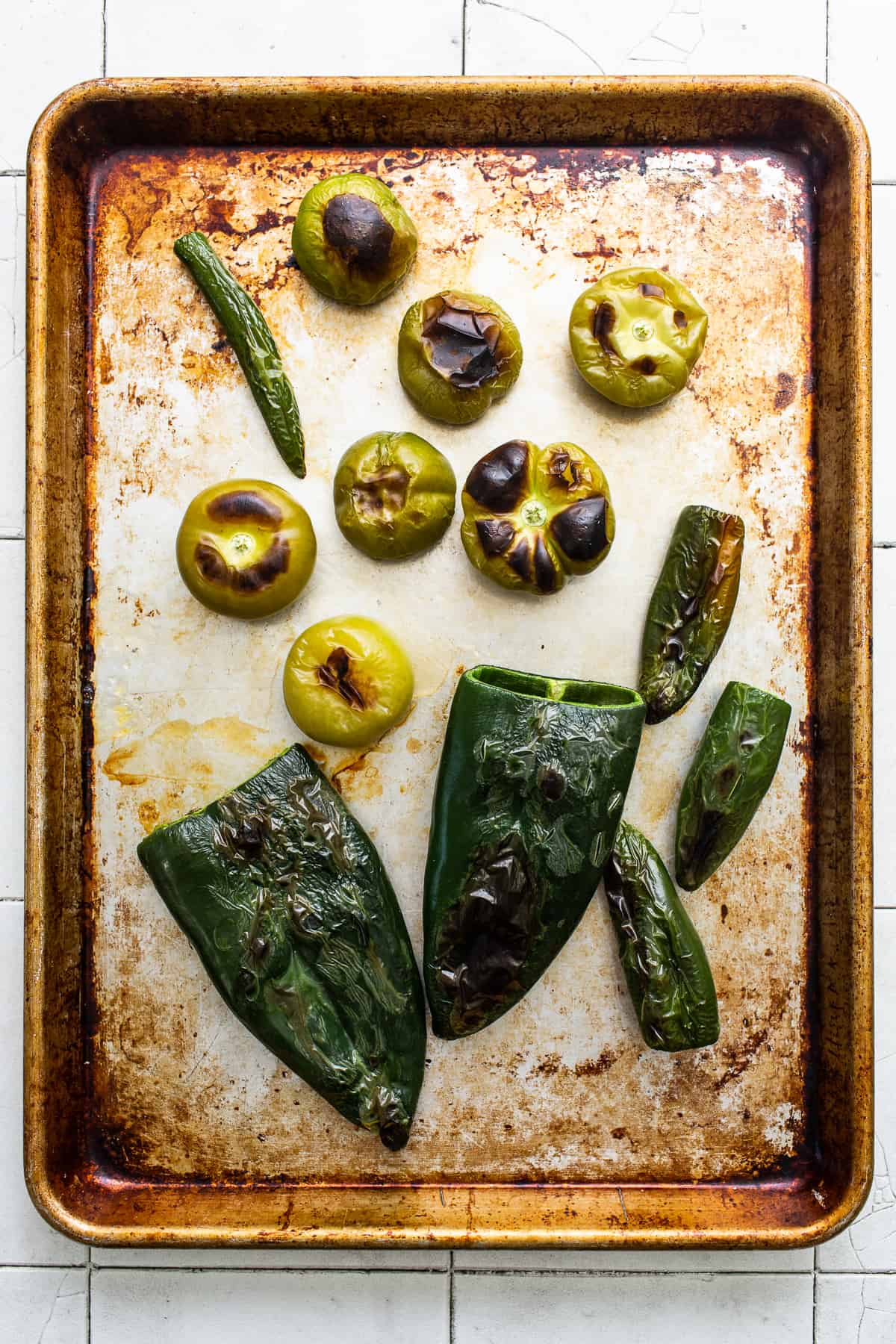
Roast the tomatillos and peppers. Place them on a baking sheet and stick them under the broiler for about 10-15 minutes, flipping the vegetables halfway through.
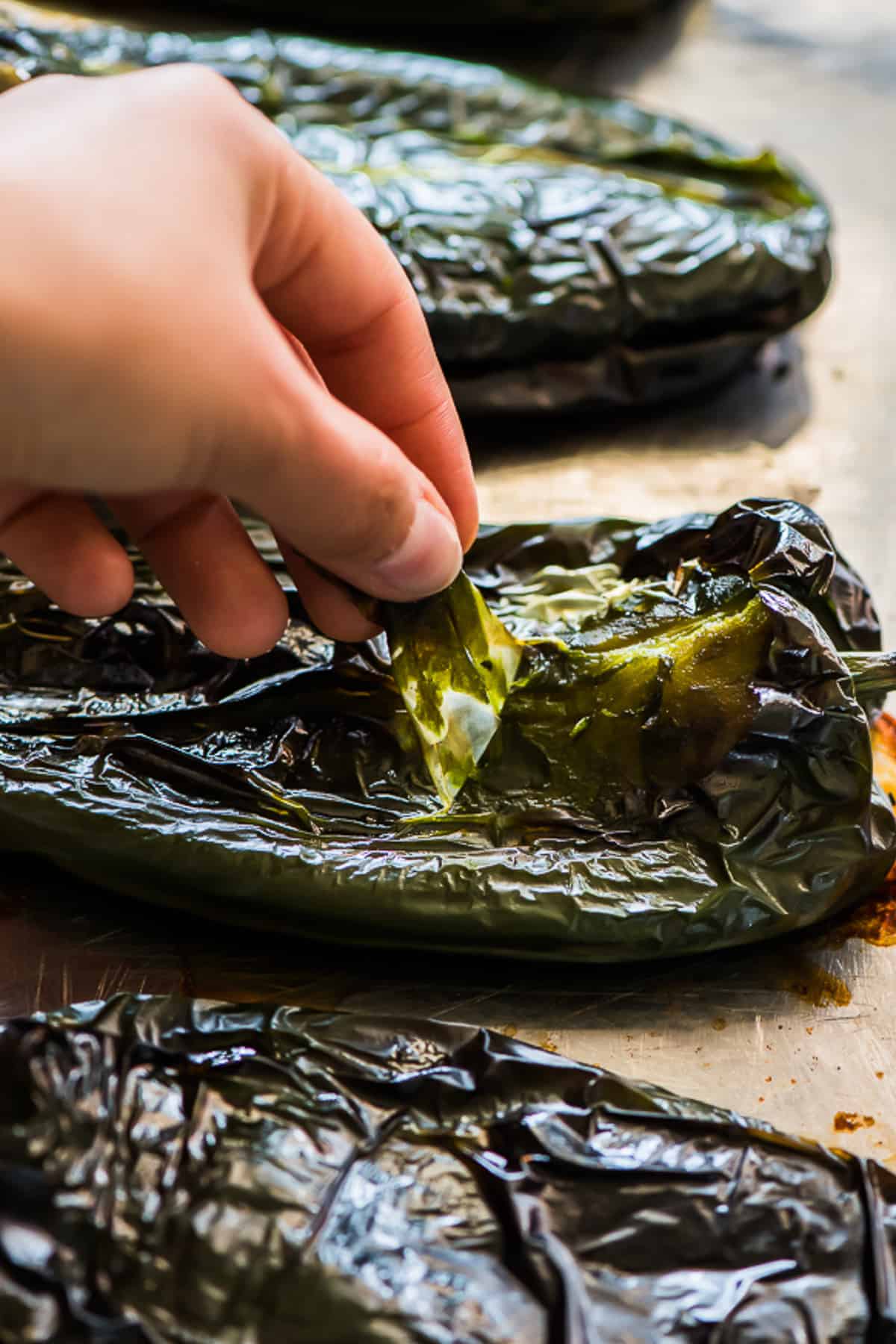
Cover, steam, and peel. Cover the peppers with aluminum foil or plastic wrap and let them sit for 10 minutes to steam and soften. Peel off and discard as much of the skin as possible. You can also remove the seeds from any of them if you don’t want it too spicy.
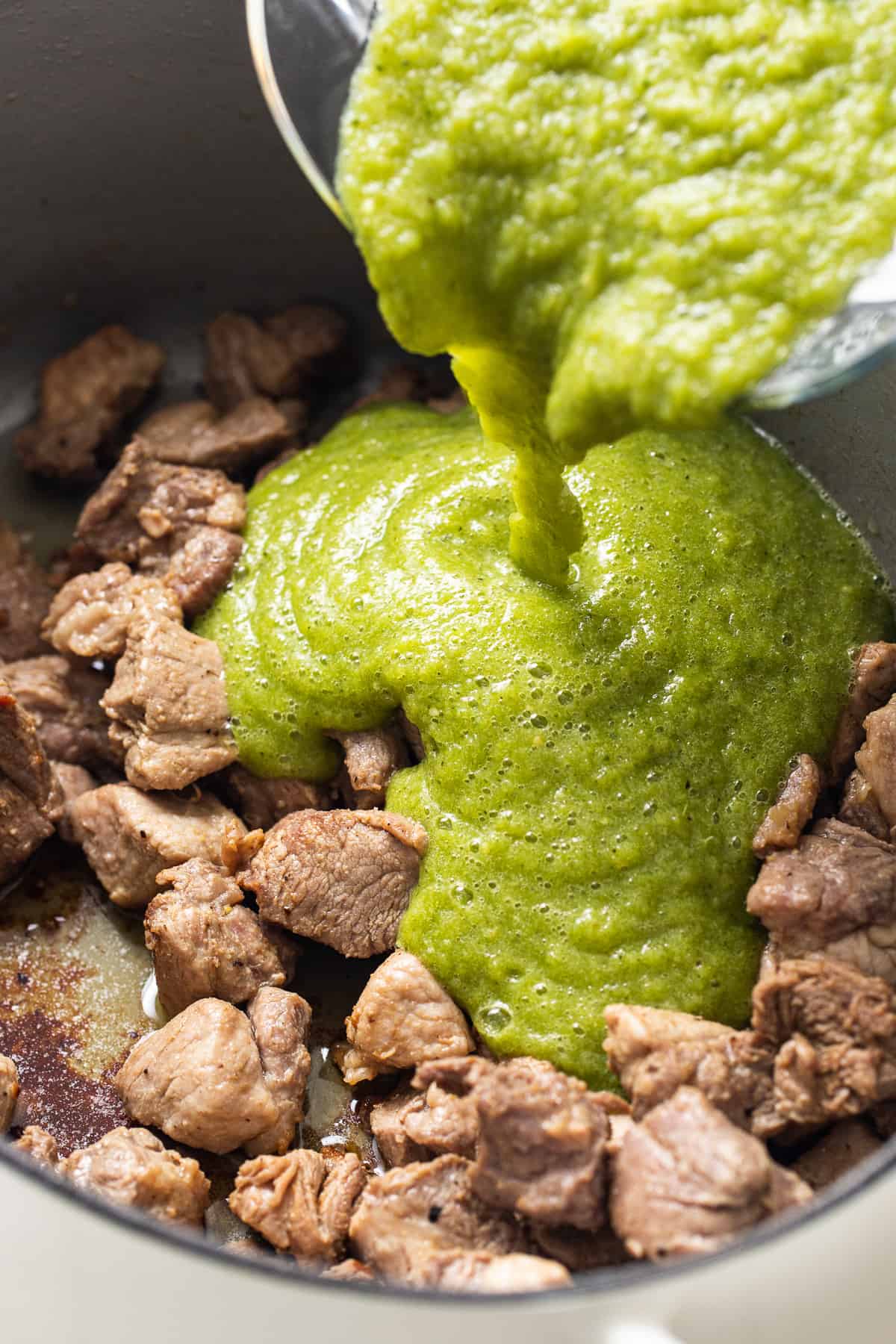
Blend and simmer. Add the tomatillos, peppers, onions, and garlic into a large blender and blend until smooth. Brown the pork in a pot, then stir in the blended salsa, scraping the bottom of the pot with a wooden spoon to get all the browned bits.
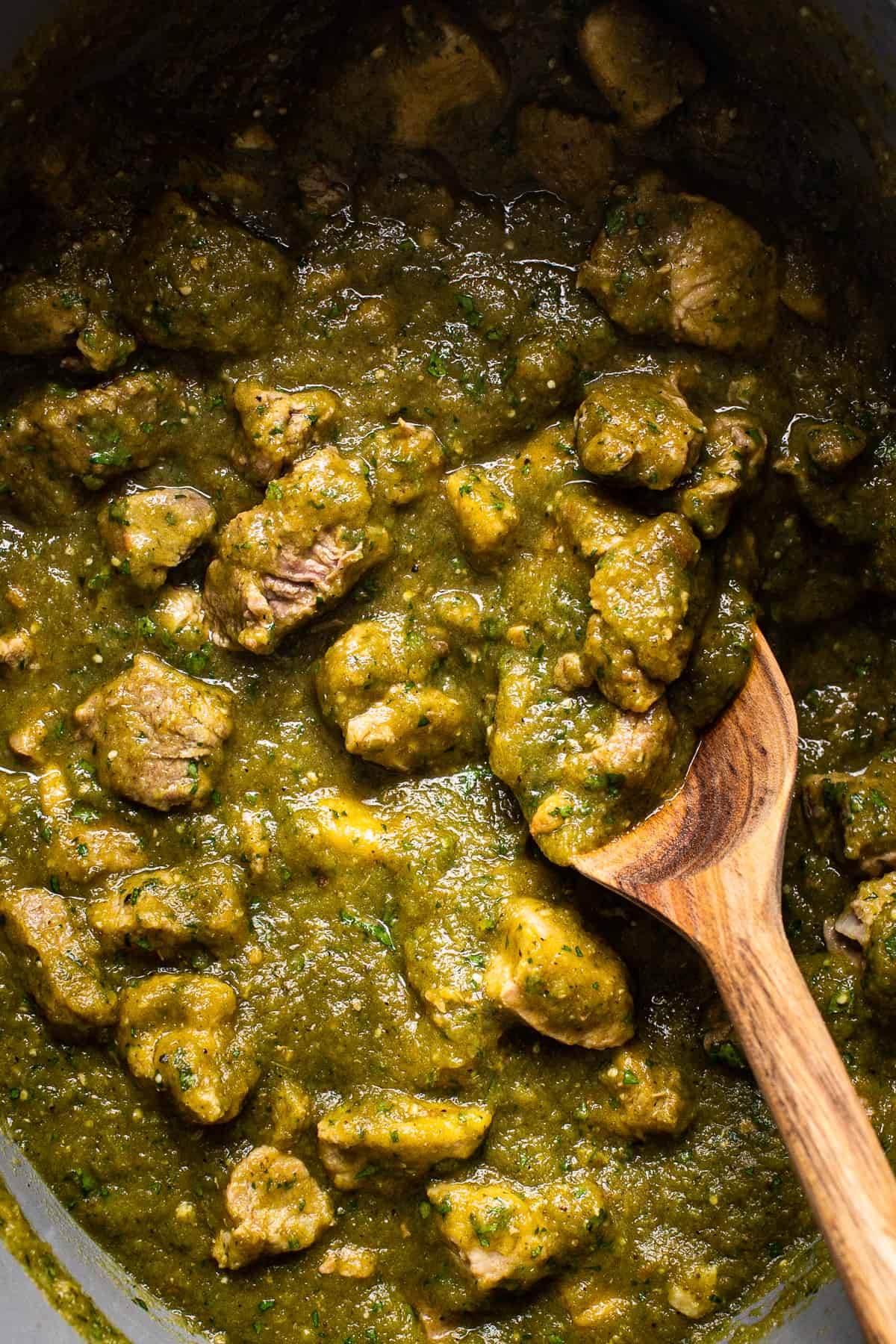
Stir in cilantro and lime juice. Remove the pot from the heat and stir in the lime juice and cilantro. Taste and season with more salt, if needed, then serve.
Recipe Tips
- Too thick? If the chile verde is too thick after simmering on the stove, stir in ½ cup of water or chicken stock at a time until it has reached your desired consistency.
- It’s even better the next day. If you have time, make it a day ahead. The flavors settle and deepen overnight, and honestly it tastes even better reheated. It’s one of those dishes that only gets better sitting in the fridge.
Serving Suggestions
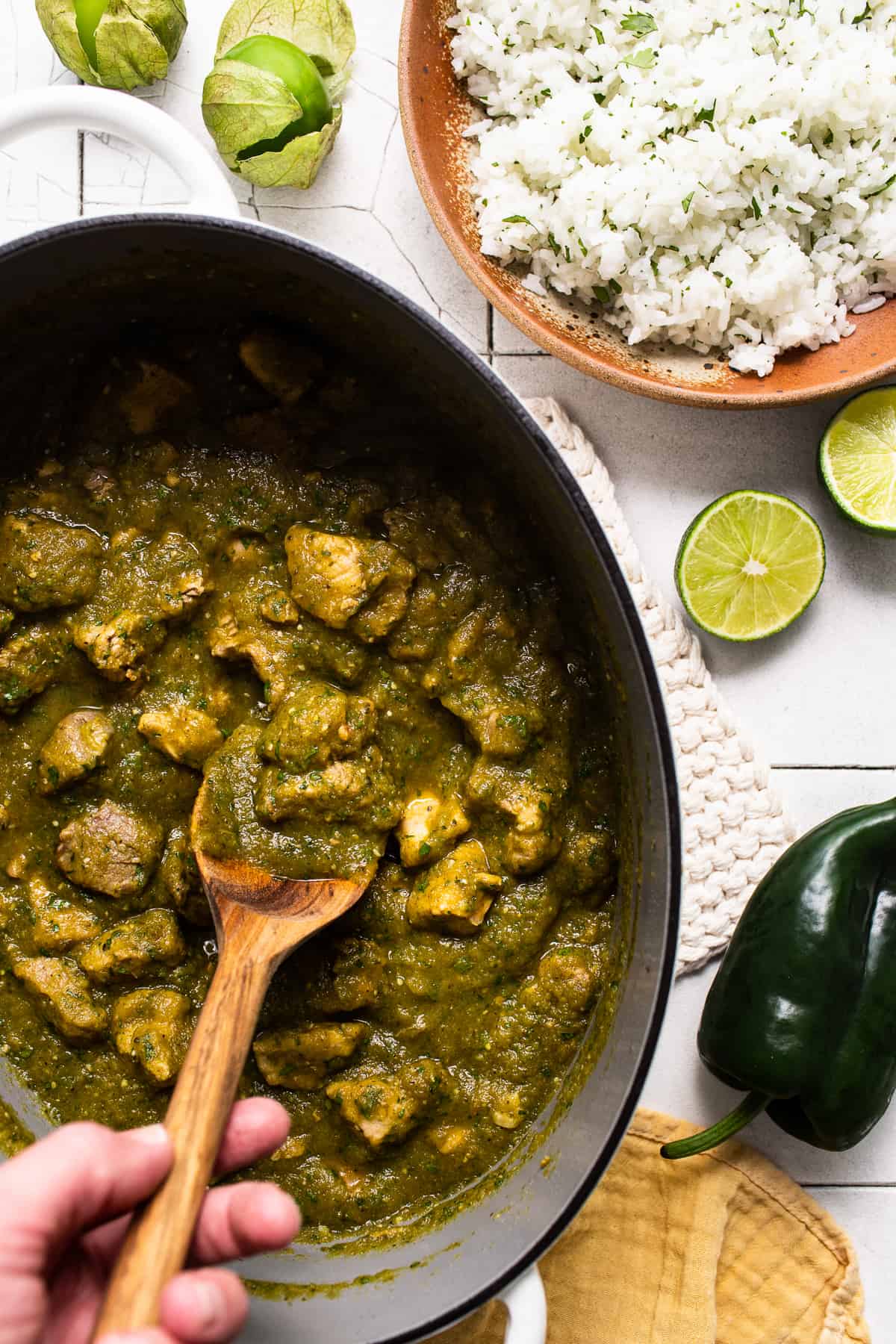
My favorite way to eat chile verde is in a bowl topped with a little cotija cheese or queso fresco, diced white onions, and a couple of warm flour tortillas or tortilla chips on the side. Yum! Here are a few other ideas:
- on a plate with Mexican rice and refried beans
- in a burrito with pinto beans and cheese
- in tacos, gorditas, sopes, or huaraches
- you can also shred the meat and add it to your morning eggs
Storing and Reheating
- To store, keep leftover chile verde in an airtight container in the fridge for 5 to 7 days. Reheat on the stove or in the microwave until warmed through.
- To freeze, place in freezer-safe storage bags or containers and freeze for up to 3 months. When ready to eat, let the frozen container thaw completely in the refrigerator or defrost in the microwave. Reheat on the stove or in the microwave until completely warm.
Frequently Asked Questions
Fresh is best here because roasting them is where so much of the flavor comes from. Canned tomatillos are already cooked, so you lose that roasted depth. If canned is all you can find, though, go with those.
Yes! Make the sauce as the recipe says, then add it and the pork to the slow cooker and cook on LOW for 6 to 8 hours or on HIGH for 4 hours, until the pork is fall-apart tender.
Yes. Pork shoulder is traditional and stays the most tender, but chicken thighs work great if that’s what you have. I’ve got a whole chicken chile verde recipe if you want to go that route. Just don’t use lean cuts like pork loin or chicken breast for the long braise. They tend to dry out.
Pork Chile Verde
Ingredients
- Cooking spray or olive oil, for greasing
- 12-16 ounces tomatillos, husked and rinsed
- 3 jalapeño peppers, stemmed
- 2 large poblano peppers, stemmed
- 1 serrano pepper, stemmed
- 2 medium onions, halved
- 3 cloves garlic
- 2 tablespoons olive oil
- 2 ½ pounds boneless pork shoulder, cut into bite sized chunks
- kosher salt and black pepper, to taste
- 2 tablespoons lime juice (about 1 lime)
- ⅓ cup chopped cilantro
Instructions
- Spray a large baking sheet with nonstick cooking spray or grease with oil. Place the tomatillos, jalapeños, poblanos, and serrano peppers on the baking sheet and place under the broiler. Broil on high for 10 minutes, flipping the vegetables over halfway through.
- Remove the baking sheet from the broiler and cover it with aluminum foil or plastic wrap. Let it sit for 10 minutes. Uncover and remove as much of the skin from the peppers as possible. At this point, you can also remove the seeds from any of the peppers if you don’t want it too spicy.
- Add the tomatillos, peppers, onions, and garlic into a large blender and blend until smooth. Set aside until ready to use.
- Heat the cooking oil in a large pot or Dutch oven over medium-high heat. Add the pork and season generously with salt and black pepper. Cook the meat on all sides until browned, about 10 minutes.
- Stir in the blended tomatillo salsa verde, scraping the bottom of the pot with a wooden spoon so you get all the brown bits. Cover, reduce the heat to low, simmer, and cook for 2 ½ to 3 hours until the pork is tender.
- Remove the pot from the heat and stir in the lime juice and cilantro. Taste and season with more salt, if needed.
- Serve over cilantro lime rice or in a bowl with tortilla chips or warm flour tortillas.
Video
Notes
- Slow cooker version: Follow the instructions for making the sauce, then add the sauce and pork to the slow cooker. Cook on low for 6 to 8 hours or on high for 4 hours.
- Instant Pot version: Make the sauce as directed, then set the Instant Pot to Sauté and brown the pork in the oil. Stir in the blended salsa, scraping up the browned bits. Lock the lid, set the valve to seal, and pressure cook on high for 35 minutes. Let the pressure release naturally for 10 to 15 minutes.
- Thickness: If the chile verde is too thick after simmering on the stove, stir in 1/2 cup of water at a time until it has reached your desired consistency.
- Storing: Keep leftovers in an airtight container in the fridge for 5 to 7 days.
- Freezing: Freeze in freezer-safe bags or containers for up to 3 months. Thaw in the fridge or microwave, then reheat on the stove or in the microwave until warmed through.
Nutrition
Nutrition information is automatically calculated, so should only be used as an approximation.
More Mexican Recipes To Make
- Birria
- Cochinita Pibil
- Chilaquiles
- Chicken Enchiladas
- Carne Asada
- Chicken Pozole Verde
- Pozole Rojo
- Pork Chili Recipe
This post was originally published in February 2018 and has been updated with new photos and more helpful tips.
Photography by Ashley McLaughlin and Isabel Orozco-Moore.










Loved this recipe. No alterations to it and was delicious!
Thanks, Laurie. I’m so happy to hear you liked it!
Isabel,
Outstanding receipt well worth the effort. I followed the directions with a couple of deviations. First, I did remove about half the seeds from all the peppers. Great news it still retained a nice spicy kick that enhanced the flavor without taking it over. Second, I added a 25% more lime juice because it was available. Used a pork loin trimming some of the fat and browned all sides it in batches using olive oil.
I added water to the blender to clean out the remaining to tomatillo & peppers mixture and used that to thin the sauce at the end.
Finally I added 3 medium potatoes with the water and the chopped cilantro (increased by 50%) because I enjoy that flavor.
Wonderful hearty meal and browning all the pork pieces completely along with 2.5 hours simmering certainly paid off.
Thanks
Dennis
Hi Isabel! Can’t wait to try this recipe! Do you actually put plastic wrap over a hot pan that just came from the broiler? Or do you transfer the peppers to a cool pan before covering with plastic? Would foil work over the hot pan? Thank you for providing step by step on the roasting of the peppers!
Hi Denise! I do actually use plastic/cling wrap over the pan. I’ve never had an issue with it. But you could also use foil or transfer the peppers to a boil and cover them with a plate. As long as the peppers are covered and sealed so that it builds up steam, it will work.
I put the peppers in a saved plastic produce bag and tie a knot in it. I leave it on the counter for 5 to 10 mins allowing the pepper skins to steam a little and to let them cool off until they’re cool enough to handle. It’s a way to recycle a bag and makes for an easy clean up. The seeds and veins are easier to remove then too!
I love your recipe!
That’s a great idea! Thanks, Suzanne. So glad you like the recipe!
Hi Isabel! I’m just starting out as a cook and wanted to ask if there’s an alternative to broiling the peppers and tomatillos?
The reason I ask is my oven doesn’t have a broiler setting on it and I really want to try to make this recipe 🙂
If you have a gas stove, you can place them directly on the flame until the char.
Has anyone tried letting it cook in a crock pot?
For a great chili verde, pork should be crispy and peppers should be blackened/fire roasted.
After all that work I usually leave it in a crockpot on low for 3 hours-overnight… depending on when I want to clean up. My verde is a mix between this and the serious eats recipe. Both recipes are amazing, evermore when combined.
Cheers!
Hi Isabel!
So I just discovered your site and I made this Chile verde last night and it was so good! I’m not a great cook so I’m always looking for websites that offer delicious authentic Mexican recipes and I have to say this was amazing. I’m looking forward to making more of your dishes!
I’m so happy you liked it, Hilda!
Would chicken broth work instead of water or is water the final word? I make my own stock and prefer to use it but if that will affect the flavor then I will use water. We live in southern Arizona and just had the best smoky flavored pork verde ever and hope this recipe comes close.
Absolutely, chicken broth will work!
Add a great marg and you’re golden. This recipe is seriously good! Kudos!
Thank you!
Could the baking sheet be covered by something besides plastic like a lid or another pan? Trying to cut back on my plastic use… I’m excited to make this for dinner this week!
Absolutely! Just as long as it’s covered so the peppers can “sweat” and condensation forms.
Yea, I have a chunk of pork butt in the freezer left over from making tamales that I didn’t quite know what to do with. So I’ve printed this recipe and I’m off to the store to buy the other ingredients. Thanks for this recipe, and ALL of your Mexican inspired recipes. My husband is from Mexico. We, too, live in the Pittsburgh area. I love your blog!
Aw thank you, Wendy! I hope you and your husband enjoyed the recipe 🙂 And I’m so happy to hear you’re from Pittsburgh. I’m in the Squirrel Hill area and I love it!